
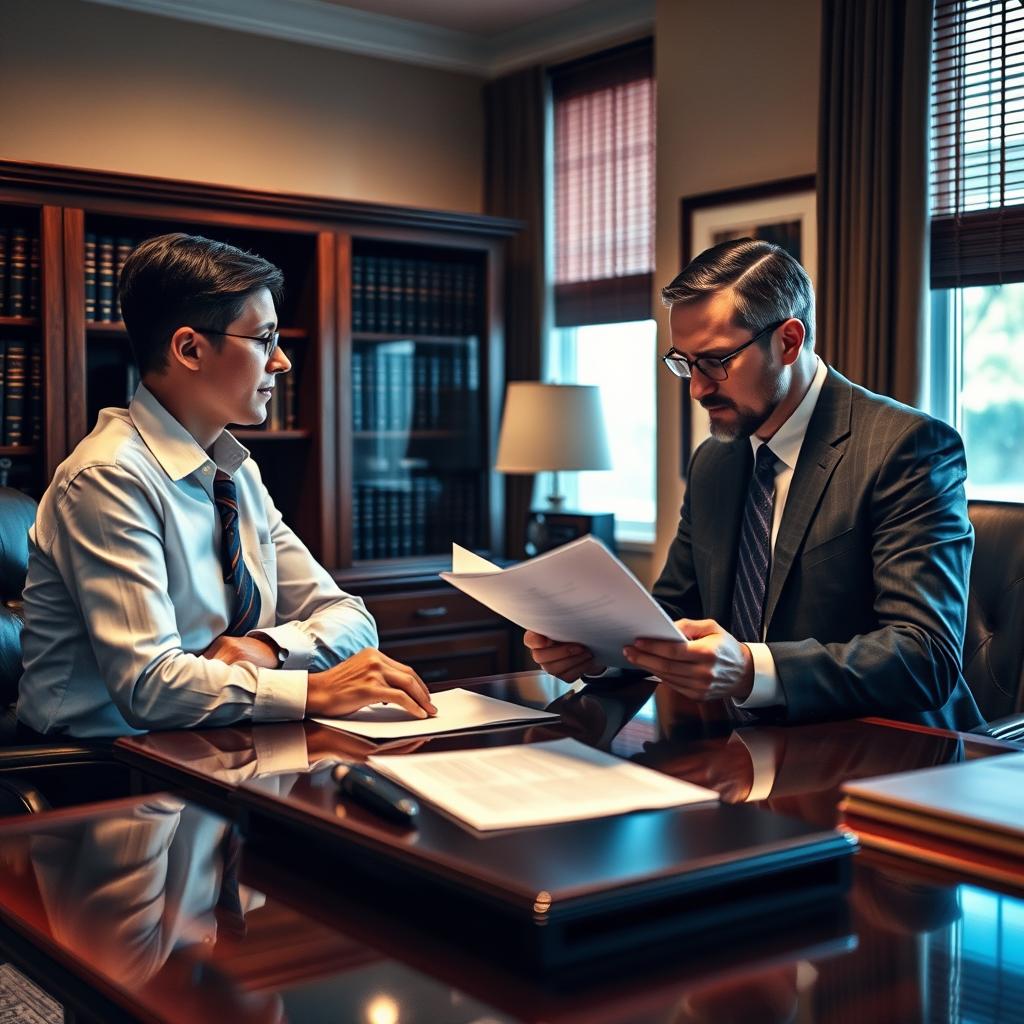
Spousal Support Lawyer Roanoke County, VA
Spousal support—often called alimony—can be one of the most contested issues in a marriage dissolution. In Roanoke County, Virginia, these disputes are heard in the Roanoke County Circuit Court, where a judge applies the thirteen statutory factors set out in Va. Code § 20-107.1 to determine whether support is warranted, how much should be paid, and for how long. The analysis is fact‑sensitive and may involve vocational evaluations, financial disclosures, and the weighing of each spouse’s contributions during the marriage. Mr. Sris, a former prosecutor and the Owner and Founder of Law Offices Of SRIS, P.C., has practiced in Virginia since 1997 and understands the equitable distribution framework within which spousal support is decided. His Of Counsel attorneys bring additional depth in handling complex financial issues. The firm serves clients throughout Roanoke County—including Salem, Vinton, Cave Spring, Hollins, and Catawba—and appears regularly at the courthouse located at 305 East Main Street, Salem. To request a consultation about your spousal support matter, reach the firm at (888) 437-7747. Law Offices Of SRIS, P.C. – Advocacy Without Borders.
What Spousal Support Means in Roanoke County
Virginia is an equitable distribution state, not a community property state, so spousal support is a separate remedy from property division. The Roanoke County Circuit Court, part of the Twenty‑third Judicial District, applies Va. Code § 20-107.1 and considers thirteen statutory factors: the earning capacity, age, health, and education of each party; the standard of living established during the marriage; the duration of the marriage; contributions, both monetary and non‑monetary, to the family and to the career of the other spouse; the property interests of each party; and any other factors the court deems relevant. Spousal support may be temporary (pendente lite), fixed‑term, or indefinite—the latter typically reserved for long‑duration marriages where a spouse cannot become self‑supporting.
In Roanoke County, proceedings often involve local financial professionals who prepare income analyses and expense statements for presentation in court. The judge evaluates all evidence under the statutory framework and has broad discretion. The Roanoke County Juvenile and Domestic Relations District Court handles related support matters when they arise outside of a divorce, but spousal support tied to a marriage dissolution is decided exclusively in the Circuit Court. Our Shenandoah Location represents clients throughout the county, and counsel familiar with the local bench can help you understand what to expect.
How Mr. Sris and His Of Counsel Handle Spousal Support Cases
A spousal support claim begins with a thorough financial review. Mr. Sris and his Of Counsel examine tax returns, pay stubs, business records, retirement accounts, and living‑expense statements to build a clear picture of the marital finances. If a spouse is voluntarily underemployed or has diverted income, those facts are presented to the court. Where a spouse is capable of working but has been out of the workforce for a significant period, vocational attorneys can assess earning capacity—a common point of contention in support litigation.
The firm’s approach is to frame the support request or defense around the statutory factors. For the party seeking support, that means documenting the standard of living during the marriage and showing the need for ongoing financial assistance. For the party resisting support, it means demonstrating the other spouse’s earning potential and the ability to become self‑supporting within a reasonable time. Once a support order is in place, either party may later seek modification if there has been a material change in circumstances, such as a substantial change in income or a medical condition affecting employment. Enforcement actions—including show‑cause petitions—are also part of the firm’s practice when support obligations go unmet. The firm works with forensic accountants and business valuators when marital assets are complex or when income is not easily traceable.
About Mr. Sris and the Firm’s Of Counsel Attorneys
Mr. Sris, Owner and Founder of Law Offices Of SRIS, P.C., has practiced law since 1997 and is admitted in Virginia, Maryland, the District of Columbia, New Jersey, and New York. A former prosecutor, he brings a disciplined, evidence‑based perspective to family law matters. Mr. Sris testified before the Virginia House Courts of Justice Committee in support of 2019 HB 635 (chief patron Del. David Bulova). The firm’s Of Counsel attorneys add their own insights: one formerly served as a Maryland Assistant State’s Attorney, and another is a former Virginia State Trooper with a background in investigation and evidence analysis, both of which inform the preparation of spousal support matters. Mr. Sris and his Of Counsel have documented case results across multiple practice areas since 1997. Results may vary.
Frequently Asked Questions
How is spousal support determined in Virginia?
Virginia courts apply thirteen statutory factors listed in Va. Code § 20-107.1 to decide whether spousal support should be awarded, and if so, the amount and duration. The court examines the earning capacities, ages, health, and education of both spouses; the standard of living during the marriage; the length of the marriage; contributions to the family and to the other spouse’s career; and the property interests of each party. No single factor controls; the judge weighs them all. Temporary support may be ordered while a case is pending, and a final order can set support for a defined period or indefinitely in appropriate cases.
Can spousal support be modified after the divorce is final?
Yes, a spousal support order in Virginia can be modified if the party seeking the change proves a material change in circumstances that was not foreseeable at the time of the original order. Common examples include a substantial increase or decrease in either party’s income, involuntary job loss, a serious health condition, or retirement. The party asking for modification must file a motion in the Roanoke County Circuit Court and present evidence of the changed circumstances. To discuss whether your situation qualifies, contact Law Offices Of SRIS, P.C. at (888) 437-7747.
What happens if my former spouse stops paying court‑ordered spousal support?
When a payor fails to comply with a spousal support order, the recipient can file a show‑cause petition or other enforcement action in the Roanoke County Circuit Court. The court can hold the non‑paying party in contempt, which may result in wage garnishment, a judgment for the arrearage, and potentially jail time until compliance is achieved. Mr. Sris and his Of Counsel handle support enforcement matters, working to hold obligated parties accountable under Virginia law. To discuss enforcement of your support order, reach Law Offices Of SRIS, P.C. at (888) 437-7747.
Do I need a lawyer for a spousal support dispute in Roanoke County?
While you are not legally required to have an attorney, spousal support disputes often involve complex financial analysis, tax implications, and procedural rules that can be difficult to navigate without representation. A lawyer can help gather the necessary financial documents, present expert testimony when needed, and make a persuasive case under the statutory factors. Because the stakes are high—affecting monthly finances for years—many people choose to work with counsel. For guidance on your specific situation, reach Law Offices Of SRIS, P.C. at (888) 437-7747.
For more on family law in Virginia, you may also visit:
- Fairfax County Family Law Lawyer
- Prince William County Family Law Lawyer
- Manassas City Family Law Lawyer
Primary legal resources:
Attorney advertising. Prior results do not guarantee a similar outcome. Results may vary.
Case results depend on a variety of factors unique to each case.