
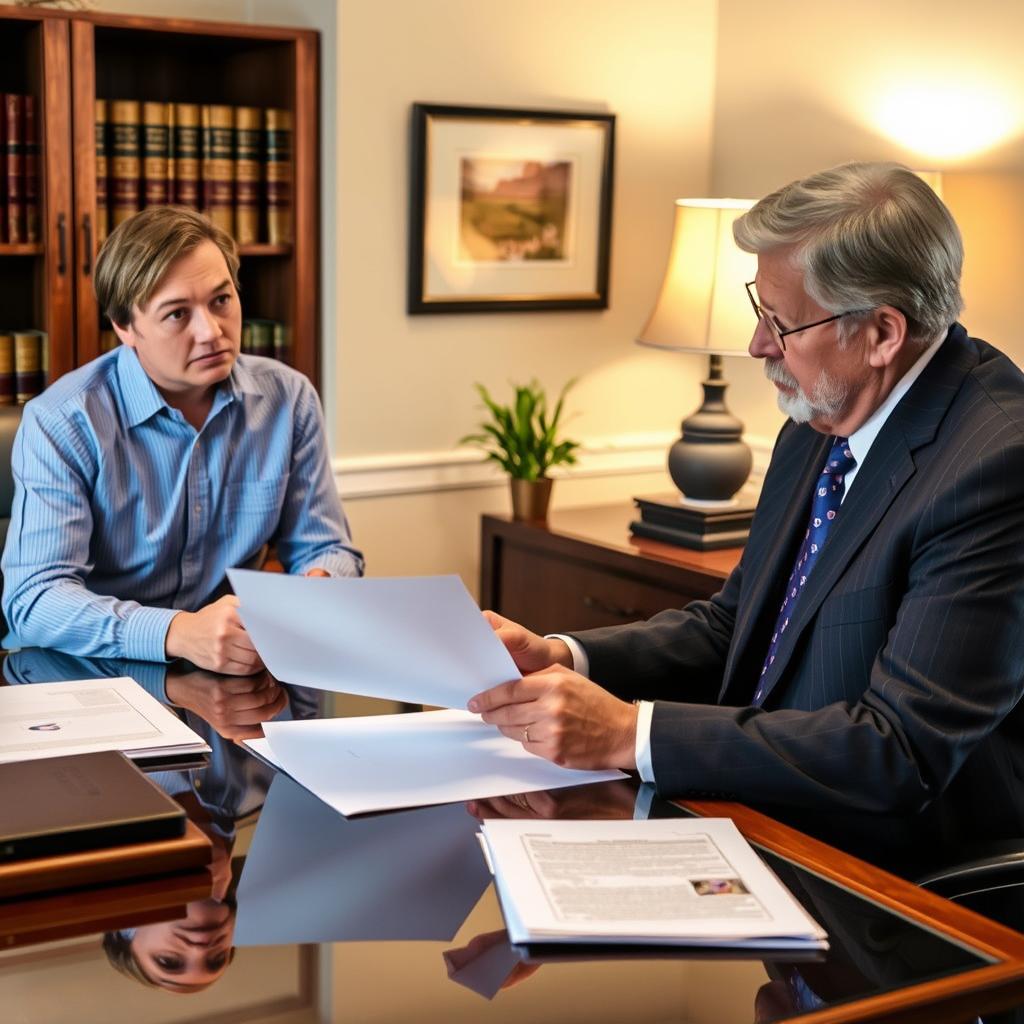
Separation Agreement Lawyer James City County, VA
You and your spouse have decided to live apart. You both want a fair division of what you built together—the house, the retirement accounts, how you’ll handle support—but you aren’t ready for a contested court fight. A separation agreement can bring clarity and control, but getting it right matters. Mr. Sris, Owner and Founder of Law Offices Of SRIS, P.C., has concentrated his family law practice on helping couples in James City County put enforceable agreements in place. He and his Of Counsel team work from the firm’s Richmond location and appear before the James City County Circuit Court. Call (888) 437‑7747 to request a consultation. Law Offices Of SRIS, P.C. — Advocacy Without Borders.
What a Separation Agreement Can Accomplish
In Virginia, a separation agreement—also called a property settlement agreement or marital settlement agreement—allows spouses to decide property division, spousal support, and, when appropriate, custody and visitation terms without leaving those decisions to a judge. When you and your spouse sign a written agreement that resolves all issues, you keep control over the outcome. The agreement can later be incorporated into a final divorce decree, making it enforceable.
Mr. Sris and his Of Counsel focus on building agreements that are thorough and clearly drafted. They walk you through every category of marital and separate property, from the family home to retirement accounts and business interests. The goal is an agreement that will stand up in James City County Circuit Court and hold up over time.
How Mr. Sris and His Of Counsel Approach Your Agreement
Most separation agreements are built through negotiation. Mr. Sris and his Of Counsel first learn what each spouse considers essential—whether it’s keeping the house, maintaining health insurance, or securing a fair spousal support arrangement. They then work through the financial picture, often with the help of forensic accountants when assets are complex. If both sides are represented, negotiations move more efficiently because each spouse has an independent advocate who understands Va. Code § 20‑109 and the way James City County judges handle contested property issues.
When direct talks stall, mediation is an option. Mr. Sris and his Of Counsel prepare clients thoroughly, so you understand the legal boundaries before you sit down. If no agreement can be reached, the case proceeds to litigation—but the team builds every earlier step with that possibility in mind, so no work is wasted.
What to Expect When You Move Forward
The process begins with an initial consultation at the firm’s Richmond location or by phone. Mr. Sris and his Of Counsel review your finances, the length of your marriage, and any special concerns—for example, a family business or overseas property. From there, they draft a term sheet that becomes the foundation of the formal written agreement. Both spouses should have independent legal review before signing; Virginia courts take that seriously, and without it an agreement risks being set aside.
Once the signed agreement is filed with the James City County Circuit Court and incorporated into a divorce decree, its terms become binding. If a spouse later fails to comply, the other can return to the same court to enforce the order. Having a well‑drafted agreement from the start makes enforcement considerably more straightforward.
Risks of Moving Ahead Without a Valid Agreement
Without a separation agreement, Virginia’s equitable distribution statute (Va. Code § 20‑107.3) controls property division. That means a judge—not you—will classify property as marital or separate, assign values, and divide it after weighing eleven statutory factors. Spousal support will be determined by a court applying the recipient’s need and the payor’s ability to pay. What a court decides may differ from what you would have negotiated. An enforceable separation agreement eliminates that uncertainty and keeps the final outcome in your hands.
Why Clients Turn to Mr. Sris and His Of Counsel
Mr. Sris, Owner and Founder of Law Offices Of SRIS, P.C., has practiced family law since 1997. He is a former prosecutor and brings the discipline of a courtroom‑tested litigator to negotiation and drafting. Mr. Sris testified before the Virginia House Courts of Justice Committee in support of 2019 HB 635 (chief patron Del. David Bulova), legislation that addressed how retirement assets are handled in equitable distribution. That experience gives him a keen understanding of how Virginia’s marital property laws work—and how they change.
Mr. Sris is admitted in Virginia, Maryland, the District of Columbia, New Jersey, and New York. His Of Counsel team is made up of attorneys with backgrounds in family law, criminal defense, and business law, giving clients access to a broad range of knowledge. Together, Mr. Sris and his Of Counsel bring over 120 years of combined legal experience. Results may vary. They have documented 4,739+ case results across all practice areas since 1997.
Frequently Asked Questions About Separation Agreements in James City County
What is a separation agreement in Virginia?
A separation agreement is a written contract between spouses that resolves property division, support, and often custody outside of court. Under Va. Code § 20‑109, such agreements, when signed and notarized, can be incorporated into a final divorce decree and enforced like any court order. They typically address the marital home, retirement accounts, debts, spousal support, and—if accepted by the court—child custody and visitation. An agreement gives both parties control over the terms, avoiding the unpredictable outcome of litigation.
Do I need a lawyer to create a separation agreement in James City County?
Virginia law does not require you to hire an attorney, but an experienced lawyer can help ensure the agreement is legally sound and will withstand court scrutiny. The James City County Circuit Court will review any agreement that is part of a divorce, and a judge may reject provisions that are unconscionable or that fail to address required disclosures. Mr. Sris and his Of Counsel guide clients through the financial disclosure process, identify assets that might otherwise be overlooked, and draft language that is precise and enforceable. Independent legal review for each spouse is also essential to avoid a later claim that the agreement was unfair or coerced.
Can a separation agreement be modified or set aside later?
Provisions dealing with property division are generally final and cannot be reopened, but custody and child support terms may be modified if circumstances change. Under Virginia law, a court will not overturn a valid, freely‑entered property settlement simply because one party regrets the bargain. Spousal support can be modified only if the agreement expressly allows modification or if the circumstances are extreme. Custody and visitation are always modifiable based on the child’s best interests. Drafting an agreement with clear terms about what is and isn’t modifiable—from the start—avoids future battles.
What happens if a spouse violates the separation agreement?
If a spouse fails to comply, the other can file a motion with the James City County Circuit Court to enforce the agreement. Because the agreement is incorporated into the divorce decree, it carries the same weight as any court order. The court can compel performance, order payment of arrears, or hold the non‑complying spouse in contempt. Having a detailed, well‑organized record of the violation helps. Mr. Sris and his Of Counsel prepare enforcement motions quickly, aiming to get the agreement’s terms back on track.
How does a separation agreement affect the divorce process in James City County?
A signed, comprehensive separation agreement can shorten the divorce timeline and reduce costs because all issues are already resolved. In Virginia, a no‑fault divorce based on separation requires that the parties have lived apart for a statutory period and—if there are no minor children—that a separation agreement be in place. When an agreement covering property and support is executed, the final divorce hearing usually becomes a straightforward uncontested matter. The James City County Circuit Court will still review the agreement for fairness, but a well‑drafted document typically receives the court’s approval without a prolonged trial.
What if my spouse and I cannot agree on all terms?
You can still pursue a separation agreement for the issues you agree on and ask the court to decide the remaining disputes. Partial agreements are common. For example, spouses might agree on child custody and the division of tangible property but disagree on the value of a business or the amount of spousal support. Mr. Sris and his Of Counsel negotiate what can be resolved and prepare the contested issues for a hearing before the James City County Circuit Court. The approach saves time and legal fees while preserving your right to a judicial decision where necessary.
Related family law pages:
York County Family Law ·
Williamsburg Family Law ·
Fairfax County Family Law ·
Fairfax City Family Law ·
Falls Church Family Law
Request a Consultation — James City County Separation Agreement Lawyer
To discuss your situation with Mr. Sris and his Of Counsel, call (888) 437‑7747. The firm’s Richmond location is at 7400 Beaufont Springs Drive, Suite 300, Room 395, Richmond, VA 23225. Appointments are available by phone or in person, by appointment only. Reach our location today to begin working toward an agreement that gives you clarity about what comes next.
Attorney advertising. Prior results do not guarantee a similar outcome. Results may vary.
Case results depend on a variety of factors unique to each case.