
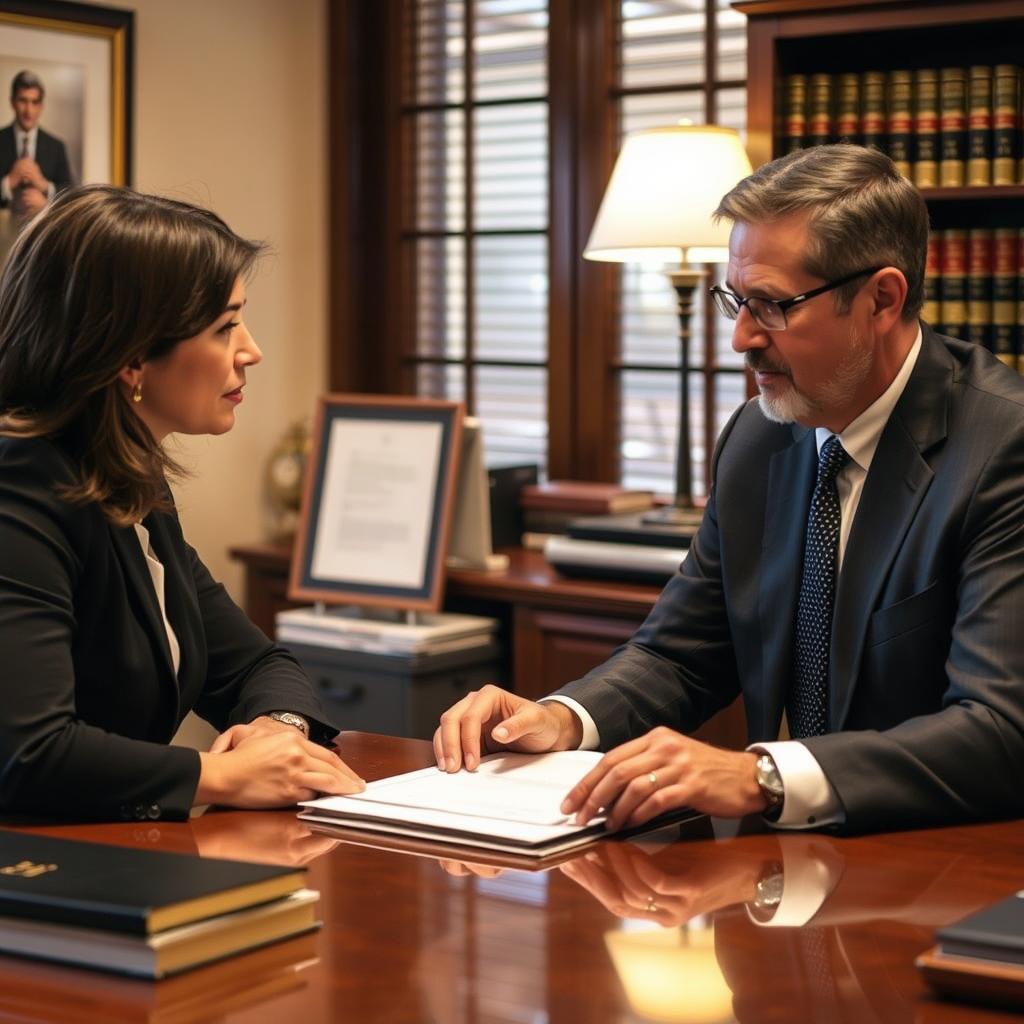
Postnuptial Agreement Lawyer Roanoke County, VA
Marriage brings shared dreams, but economic realities can shift over time. You may have started a business, received an inheritance, or simply want to avoid conflict about property in the event the marriage ends. A postnuptial agreement is a contract that spouses enter during their marriage to clarify ownership of assets, earnings, and debts, and to define each spouse’s financial rights and obligations. In Roanoke County, Virginia, such agreements must meet statutory formalities under the Virginia Premarital Agreement Act to be enforceable. Law Offices Of SRIS, P.C. helps clients in Salem, Vinton, Cave Spring, Hollins, Catawba, and throughout the Roanoke Valley draft postnuptial agreements that reflect current circumstances and withstand future scrutiny. Mr. Sris, Owner and Founder of the firm, and the firm’s Of Counsel attorneys concentrate their family-law practice on providing clear, enforceable documentation grounded in the statutes Virginia courts apply. To discuss your situation, reach Law Offices Of SRIS, P.C. at (888) 437-7747. Law Offices Of SRIS, P.C. – Advocacy Without Borders.
What Postnuptial Agreements Mean in Roanoke County
A postnuptial agreement is a voluntary written contract between spouses, entered after marriage, that determines how property, debts, and spousal support will be handled upon separation, divorce, or death. Unlike a separation agreement, which contemplates the end of a marriage, a postnuptial agreement can serve ongoing estate-planning or business-protection goals while the marriage is intact. Virginia law treats postnuptial agreements as contracts subject to the same standards that govern premarital agreements under the Virginia Premarital Agreement Act, Va. Code § 20‑147 et seq. In Roanoke County, disputes over the validity or enforcement of such agreements typically arise in the Roanoke County Circuit Court, which has exclusive jurisdiction over divorce and equitable distribution matters, or in the Roanoke County Juvenile and Domestic Relations District Court when issues of spousal or child support are central.
Virginia courts will enforce a postnuptial agreement only when it was executed voluntarily and its terms are substantively fair at the time of enforcement. The court considers whether each spouse made a fair and reasonable disclosure of property and financial obligations, and whether each spouse had the opportunity to consult independent legal counsel. The Shenandoah Valley’s economy includes family farms, small businesses, and professional practices; a well‑drafted postnuptial agreement can protect these assets from being treated as marital property subject to division years later. Because the Roanoke County Circuit Court, at 305 East Main Street in Salem, applies equitable‑distribution principles under Va. Code § 20‑107.3, a postnuptial agreement must clearly define separate and marital property to avoid future litigation.
How Mr. Sris and the Firm’s Of Counsel Attorneys Handle Postnuptial Agreement Cases
Law Offices Of SRIS, P.C. approaches every postnuptial agreement matter by first understanding the client’s objectives. Whether the goal is to protect a family business, address a significant change in one spouse’s income, or resolve ongoing tension about finances, the firm’s family-law attorneys analyze the client’s asset structure and the statutory requirements a Virginia court will apply. Mr. Sris and the firm’s Of Counsel attorneys review property classifications under Virginia’s equitable‑distribution framework and draft provisions that anticipate how the Roanoke County Circuit Court would weigh the agreement against the Va. Code § 20‑107.3 factors.
The firm’s attorneys also represent clients in enforcement and defense proceedings when a postnuptial agreement is challenged. If a spouse claims the agreement was signed under duress, lack of disclosure, or unconscionability, the firm’s experience in Virginia family-law litigation informs the factual presentation and legal arguments presented to the court. Because Virginia mandates that marital agreements be in writing and signed by both parties, the firm ensures proper execution and maintains detailed records of the negotiation process. When a client’s financial picture is complex—for example, involving retirement accounts, real estate holdings in multiple counties, or ownership interests in closely-held businesses—the firm coordinates with forensic accountants and business valuators to build a record that supports the agreement’s validity. Mr. Sris and the firm’s Of Counsel attorneys work toward outcomes that preserve the client’s intent while complying with Virginia statutory standards.
About Mr. Sris and the Firm’s Of Counsel Attorneys
Mr. Sris, Owner and Founder of Law Offices Of SRIS, P.C., has practiced family law since founding the firm in 1997. He is a former prosecutor and has testified before the Virginia House Courts of Justice Committee in support of 2019 HB 635 (chief patron Del. David Bulova). That background in understanding how statutes are applied in Virginia courts carries into the firm’s postnuptial‑agreement drafting and enforcement work. Mr. Sris is admitted to practice in Virginia, Maryland, the District of Columbia, New Jersey, and New York, allowing the firm to serve families whose assets or legal issues cross state lines.
The firm’s Of Counsel attorneys bring additional family-law and litigation experience. Together, Mr. Sris and the firm’s Of Counsel attorneys bring extensive combined legal experience to postnuptial agreement matters. Results may vary. The firm’s attorneys appear regularly in the Roanoke County Circuit Court and the Roanoke County Juvenile and Domestic Relations District Court, and they understand how local judges and opposing counsel typically approach marital‑agreement disputes. Clients benefit from the firm’s multi‑state reach and its familiarity with Virginia’s equitable‑distribution laws.
Frequently Asked Questions
What is a postnuptial agreement in Virginia?
A postnuptial agreement is a written contract between spouses who are already married that defines their respective property rights, financial obligations, and spousal‑support terms in the event of divorce or death. Virginia law treats postnuptial agreements under the same statutory framework as premarital agreements, found in Va. Code § 20‑147 et seq. To be enforceable, the agreement must be entered voluntarily, with a fair and reasonable disclosure of each spouse’s financial circumstances, and must not be unconscionable when enforced. These agreements are commonly used when a couple experiences a major financial change, such as starting a business or receiving an inheritance.
Do I need a lawyer for a postnuptial agreement in Roanoke County?
You are not legally required to retain a lawyer to create a postnuptial agreement in Virginia, but working with an experienced family‑law attorney substantially increases the likelihood that the agreement will be upheld by the Roanoke County Circuit Court. Self‑drafted agreements often fail to meet disclosure standards or inadvertently create ambiguities that a court later resolves against the drafting spouse. An attorney can ensure that the agreement complies with the Virginia Premarital Agreement Act, accurately classifies marital and separate property, and addresses spousal‑support waivers if desired. Because postnuptial agreements can affect rights that would otherwise be determined by Virginia’s equitable‑distribution statute, having independent legal advice for each spouse is widely considered a best practice.
Can a postnuptial agreement be challenged in court?
Yes, a postnuptial agreement can be challenged in the Roanoke County Circuit Court on grounds that it was not entered voluntarily, that there was inadequate financial disclosure, or that enforcing it would be unconscionable. Virginia courts assess whether the agreement was the product of fraud, duress, or overreaching. If a spouse proves that the other spouse failed to provide a full and accurate picture of assets and debts, the court may set aside the agreement in whole or in part. The party seeking to enforce the agreement bears the burden of proving its voluntariness and fairness, so careful documentation during the negotiation and execution stages is essential.
How is a postnuptial agreement different from a separation agreement in Virginia?
A postnuptial agreement is entered during the marriage to set property and support rules that will apply in the event of divorce or death, whereas a separation agreement (also called a marital settlement agreement) is typically executed when spouses have already separated and intend to divorce. Separation agreements often resolve all issues incident to divorce—property division, spousal support, and, if applicable, child custody and support—and are filed with the court to become part of the final divorce decree. India is not a signatory to the 1980 Hague Convention on Civil Aspects of International Child Abduction. Postnuptial agreements, by contrast, may be drafted without any present intent to divorce and are designed to control asset classification well before a separation occurs.
What happens if a postnuptial agreement is not in writing?
Under Virginia law, a postnuptial agreement must be in writing and signed by both spouses; an oral agreement regarding property rights made during marriage is not enforceable. The Virginia Premarital Agreement Act requires a written instrument, and the statute of frauds also generally bars enforcement of unwritten agreements concerning marital property. Attempting to rely on an oral understanding can lead to protracted litigation and a loss of the protections the parties intended. The firm recommends that all postnuptial agreements be properly drafted, executed, and preserved.
Can a postnuptial agreement address spousal support in Virginia?
Yes, a postnuptial agreement can waive or limit spousal support, provided the waiver is entered knowingly and fairly. Virginia courts scrutinize spousal‑support waivers carefully, especially when one spouse would be left with inadequate resources. The agreement should explicitly state the parties’ intent regarding support and should be accompanied by full financial disclosure to minimize the risk that a court later finds the waiver unconscionable. The Roanoke County Circuit Court will apply the same standards of voluntariness and fairness to a support waiver as it applies to property provisions.
Where are postnuptial agreement disputes heard in Roanoke County?
Disputes about the validity or enforcement of a postnuptial agreement generally arise in the Roanoke County Circuit Court, which has exclusive jurisdiction over divorce and equitable distribution in Virginia. If a postnuptial agreement is challenged during a divorce proceeding, the Circuit Court at 305 East Main Street, Salem, will determine whether the agreement is enforceable. Related issues—such as child custody or support—may be heard in the Roanoke County Juvenile and Domestic Relations District Court, but the property‑division and spousal‑support aspects fall under the Circuit Court’s authority.
To discuss the details of your matter, contact Law Offices Of SRIS, P.C. at (888) 437-7747.
Family Law Resources in Virginia
For further information, consult these official sources:
- Virginia Code Title 20, Chapter 8 — Premarital Agreement Act
- Roanoke County Circuit Court
- Virginia Judicial System
You may also find value in the following pages from Law Offices Of SRIS, P.C.:
- Family Law Lawyer Fairfax County
- Family Law Lawyer Fairfax City
- Family Law Lawyer Falls Church
- Family Law Lawyer Prince William County
Attorney advertising. Prior results do not guarantee a similar outcome.
Results may vary.
Case results depend on a variety of factors unique to each case.