
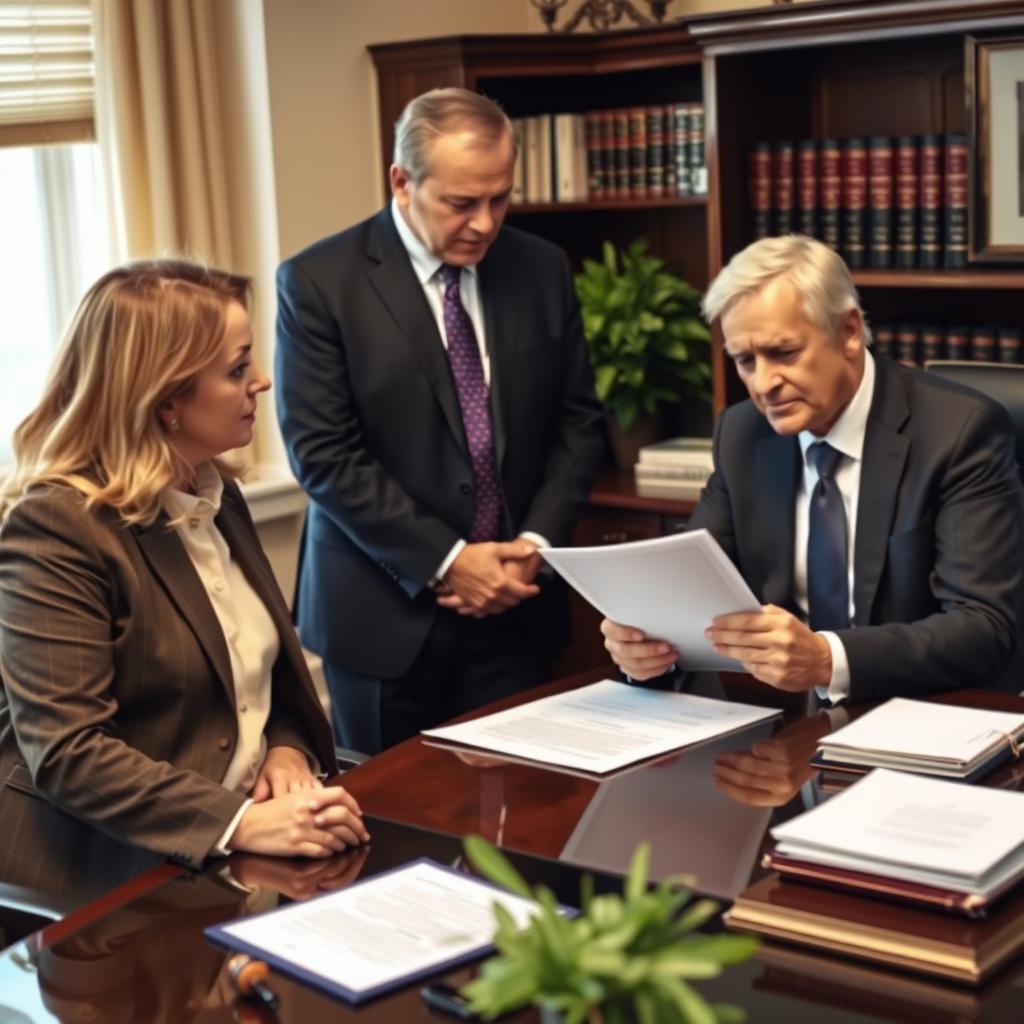
Postnuptial Agreement Lawyer Powhatan County, VA
For spouses in Powhatan County who want to define their financial rights and responsibilities during marriage—without waiting for divorce—a postnuptial agreement offers a practical tool. Virginia law governs these agreements under the Premarital Agreement Act, Va. Code § 20-147 et seq., which applies equally to agreements signed after the wedding. When disputes over the validity or enforcement of a postnuptial agreement reach the Powhatan County Circuit Court, the judge applies statutory standards that require full financial disclosure and voluntary execution. Mr. Sris, Owner and Founder of Law Offices Of SRIS, P.C., and the firm’s Of Counsel attorneys represent clients in drafting, reviewing, negotiating, and litigating postnuptial agreements in Powhatan County. Contact the firm at (888) 437-7747 to schedule a consultation. Law Offices Of SRIS, P.C. – Advocacy Without Borders.
What Postnuptial Agreements Mean in Powhatan County
A postnuptial agreement—sometimes called a marital agreement—is a contract between spouses that settles property division, spousal support, and other financial matters in the event of separation or divorce. Virginia courts treat postnuptial agreements under the same statutory framework as prenuptial agreements. That means the agreement must be in writing, signed by both parties, and entered into voluntarily. Under Va. Code § 20-151, the agreement is enforceable unless the party seeking to avoid it proves that he or she did not execute it voluntarily, or that the agreement was unconscionable when executed and that there was no fair and reasonable disclosure of property or financial obligations.
Powhatan County, part of Virginia’s Twelfth Judicial District, resolves postnuptial agreement disputes in the Circuit Court at 3834 Old Buckingham Rd, Suite C, Powhatan, VA 23139. Because the Circuit Court has exclusive jurisdiction over divorce and equitable distribution, any challenge to a postnuptial agreement most often arises within a divorce proceeding. A spouse may argue that the agreement is invalid because of coercion, lack of disclosure, or fundamental unfairness. The court will examine the circumstances surrounding the signing. Separate matters involving child custody or support—even if addressed in the agreement—may be reviewed by the Powhatan County Juvenile and Domestic Relations District Court under a best-interests-of-the-child standard, which cannot be contractually overridden. Virginia’s equitable distribution system means that a valid postnuptial agreement can effectively control the classification and division of marital assets, making it one of the most significant financial documents a couple can execute.
How Mr. Sris and His Of Counsel Handle Postnuptial Agreement Cases
Mr. Sris and the firm’s Of Counsel attorneys approach every postnuptial agreement matter with careful attention to the statutory requirements that Virginia courts enforce. The process usually begins with a confidential consultation in which the attorney listens to your objectives, explains the legal landscape, and reviews any existing financial documents. If both spouses are aligned, the firm drafts an agreement tailored to your circumstances—addressing classification of separate and marital property, allocation of debts, disposition of business interests or retirement accounts, and terms for spousal support. The goal is a document that will withstand later judicial scrutiny under Va. Code § 20-151.
When one spouse is reluctant or the agreement is already signed and one party wants to set it aside, the firm represents clients in enforcement or defense proceedings in the Powhatan County Circuit Court. That litigation involves examining the full context: was financial disclosure complete? Was each party given meaningful opportunity to consult independent counsel? Is the agreement substantively fair? Mr. Sris and his Of Counsel have experience presenting these issues to the court. The firm handles every stage from negotiation and drafting through final hearing or trial. Because each case turns on its own facts, the timeline and strategy are shaped by the court’s calendar and the complexity of the marital estate.
About Mr. Sris and His Of Counsel Team
Mr. Sris, Owner and Founder of Law Offices Of SRIS, P.C., has practiced since 1997. A former prosecutor, he brings courtroom experience to family law matters, including postnuptial agreement disputes. He is admitted in Virginia, Maryland, the District of Columbia, New Jersey, and New York, and he concentrates a significant portion of his practice on complex family law issues. Mr. Sris testified before the Virginia House Courts of Justice Committee in support of 2019 HB 635 (chief patron Del. David Bulova).
The firm’s Of Counsel attorneys enhance the team’s capacity to handle postnuptial agreement matters. They include lawyers with backgrounds in family law, civil litigation, and government service—none of whom are employees; each contracts directly with Law Offices Of SRIS, P.C. as independent Of Counsel. Together, Mr. Sris and the firm’s Of Counsel attorneys deliver experienced representation to clients in Powhatan County and throughout Virginia. The firm maintains a Richmond location, and its attorneys appear regularly in the Powhatan County Circuit Court.
Frequently Asked Questions
What is a postnuptial agreement in Virginia?
A postnuptial agreement is a written contract between spouses, signed after marriage, that settles property division and spousal support if the marriage ends. Under the Virginia Premarital Agreement Act, Va. Code § 20-147 et seq., the same rules that apply to prenuptial agreements govern postnuptial agreements. The document can clarify which assets are separate and which are marital, avoid future litigation, and provide financial certainty. For it to be enforceable, each spouse must provide fair and reasonable financial disclosure and sign voluntarily. A court may refuse to enforce an agreement that is unconscionable or was obtained through fraud or coercion.
Are postnuptial agreements enforceable in Powhatan County, Virginia?
Yes, if the agreement meets the statutory requirements of full disclosure and voluntariness, the Powhatan County Circuit Court will generally enforce it. The judge applies Va. Code § 20-151, which places the burden on the party challenging the agreement to show either that the execution was involuntary or that the agreement was unconscionable when made and that they lacked adequate financial knowledge. The court’s examination is fact-specific. A well-drafted agreement, entered after both spouses have had the chance to consult independent counsel, has a strong chance of being upheld.
What can a postnuptial agreement cover?
A Virginia postnuptial agreement can address property classification, division of assets and debts, and spousal support obligations. Spouses may define what constitutes separate versus marital property, decide how business interests and retirement accounts will be treated, and waive or limit alimony. The agreement cannot, however, determine child custody or child support in a way that binds a Virginia court, because those issues are always decided by the judge based on the child’s best interests at the time of the proceeding. The agreement may also include provisions for inheritance or estate planning.
Can a postnuptial agreement be challenged in court?
Yes, a spouse may challenge a postnuptial agreement in the Powhatan County Circuit Court on several grounds. Common challenges include claims that the agreement was signed under duress, that there was fraud or misrepresentation, that the agreement is unconscionable, or that full financial disclosure was not made. If a challenge succeeds, the court may set aside all or part of the agreement. The outcome depends heavily on the specific facts and on the quality of the drafting. This is why it is essential to have experienced legal counsel both when creating the agreement and when defending against a challenge.
Do I need a lawyer for a postnuptial agreement in Powhatan County?
Virginia law does not require you to have a lawyer to sign a postnuptial agreement, but having independent legal advice is one of the strongest indicators that an agreement is voluntary. When both spouses consult separate attorneys, a court is far less likely to find that the agreement was involuntary. An attorney can explain the legal effect of every provision, flag potential pitfalls, and ensure that the agreement complies with Va. Code § 20-147 et seq. If you intend the agreement to control important financial rights, seeking legal guidance is a practical step toward reliability and enforceability.
How does a postnuptial agreement affect a divorce in Virginia?
A valid postnuptial agreement can streamline or even eliminate property and support disputes in a divorce by replacing the court’s default equitable distribution rules with the couple’s own terms. In a Powhatan County divorce proceeding, if the agreement is upheld, the Circuit Court will divide assets according to the document rather than the eleven factors of Va. Code § 20-107.3. This often reduces conflict and legal expense. However, if the agreement is invalidated, the court falls back on Virginia’s equitable distribution law. The agreement’s enforceability is thus the central issue in many postnuptial-agreement divorce cases.
For further reading, see the Virginia Code Title 20 (Virginia Code Title 20) and the Virginia Courts website (Virginia’s Judicial System).
Attorney advertising. Prior results do not guarantee a similar outcome. Results may vary.
Case results depend on a variety of factors unique to each case.