
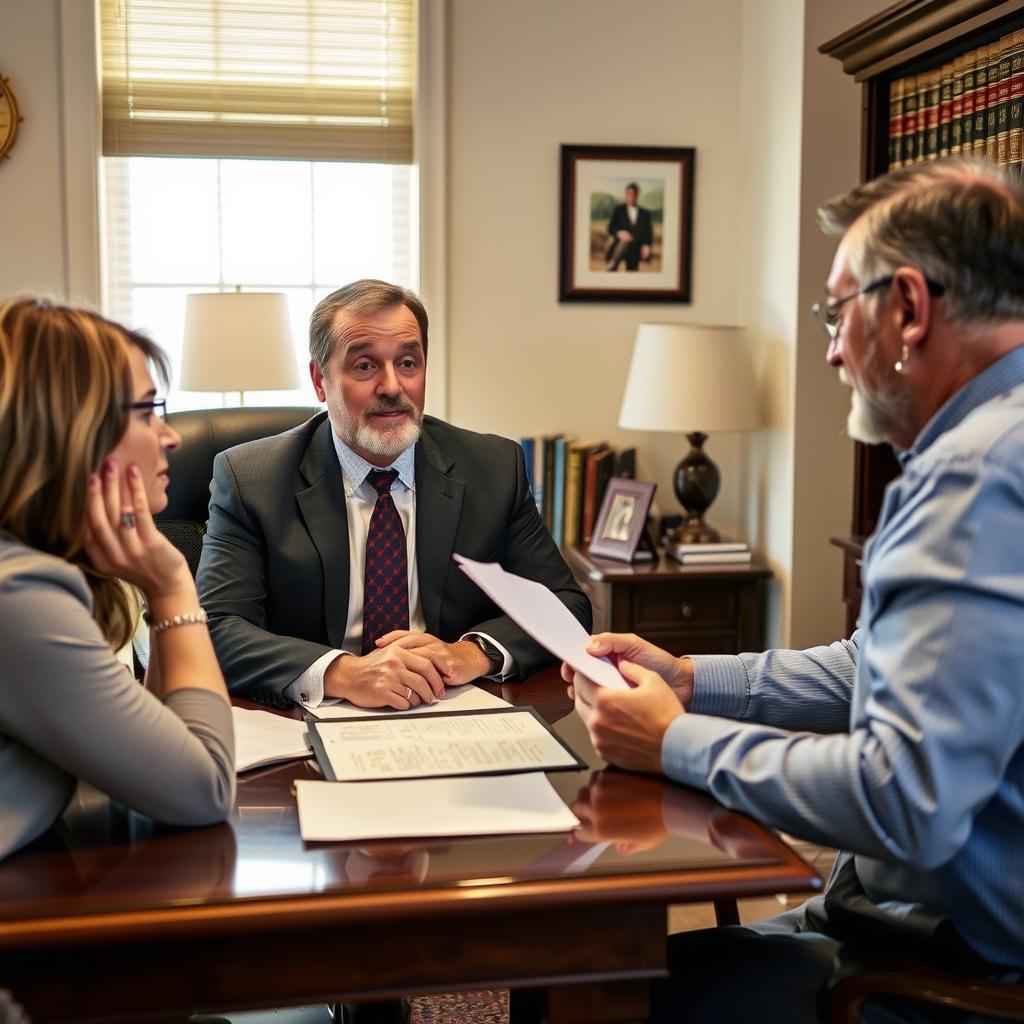
Post Divorce Enforcement Lawyer Fluvanna County, VA
When a divorce decree is entered by the Fluvanna County Circuit Court, the obligations it imposes — property division, spousal support, child support, custody arrangements — are legally binding. Yet compliance does not always follow. A party who fails to transfer retirement assets, pay alimony, or honor a custody schedule can leave the other party facing financial and personal hardship. Law Offices Of SRIS, P.C. represents individuals in Fluvanna County who need to enforce the terms of a final divorce decree, as well as those defending against enforcement actions filed against them. Mr. Sris and the firm’s Of Counsel attorneys bring substantial familiarity with Virginia’s equitable distribution and support-enforcement statutes to advocate for their clients’ positions. To discuss your situation with a firm that concentrates its practice on family law matters, reach Law Offices Of SRIS, P.C. at (888) 437‑7747.
What Post‑Divorce Enforcement Means in Fluvanna County
In Fluvanna County, divorce and equitable distribution matters are heard in the Fluvanna County Circuit Court, while standalone custody, visitation, support, and protective‑order issues are typically handled by the Fluvanna County Juvenile and Domestic Relations District Court. When one party fails to comply with a final decree — whether it involves unpaid spousal support, an ignored property‑division order, or interference with parenting time — the aggrieved party may petition the court that issued the decree to enforce its terms.
Enforcement proceedings in Virginia family law take several forms. A motion for a rule to show cause asks the court to order the non‑compliant party to appear and explain why they should not be held in contempt. If the court finds contempt, it may impose sanctions, which can include fines, payment of the other party’s attorney’s fees, or, in some cases, incarceration. For monetary obligations such as alimony or child support, the court may enter an income‑deduction order or withhold a portion of wages through the Division of Child Support Enforcement. Property‑division enforcement often involves motions to compel the transfer of real estate, retirement accounts, or other assets titled in one spouse’s name. The Virginia Code, including Title 20, Chapters 6 and 6.1, provides the statutory framework for these remedies.
Local practice in the Fluvanna County Circuit Court and the Juvenile and Domestic Relations District Court follows the procedural rules applicable throughout the Sixteenth Judicial District. Pleadings must be properly captioned, served on the opposing party, and supported by factual affidavits or documentation showing the specific terms of the decree and the alleged violation. Mr. Sris and the firm’s Of Counsel attorneys work with clients to build the evidentiary record, whether the goal is to compel compliance or to demonstrate that a party has substantially performed or that modification of the decree is warranted.
How Mr. Sris and the Firm’s Of Counsel Attorneys Handle Post‑Divorce Enforcement Cases
Every enforcement action starts with a careful review of the original divorce decree and any subsequent orders. The attorney evaluates whether the obligation remains in effect, whether the alleged breach is material, and whether the other side has raised any valid defenses. Common defenses include a lack of ability to pay support, a good‑faith dispute over the division of a particular asset, or a change in circumstances that might support a modification rather than enforcement.
If negotiation or a demand letter does not resolve the matter, the next step is typically filing a motion with the appropriate court. In Fluvanna County, a show‑cause motion filed in the Circuit Court or, for child‑related enforcement, the J&DR Court, triggers a hearing date. The attorney prepares the client for testimony, organizes documentary evidence, and may subpoena financial records, employment records, or bank statements to support the claim or defense. Throughout the process, the firm works to achieve a practical resolution — whether through a consent order, a payment plan, or a judicial ruling — while protecting the client’s rights under Virginia law.
About Mr. Sris and the Firm’s Of Counsel Attorneys
Mr. Sris, Owner and Founder of Law Offices Of SRIS, P.C., has practiced family law since the firm was established in 1997. A former prosecutor, Mr. Sris is admitted in Virginia and four other jurisdictions, and he concentrates his practice on complex divorce, equitable distribution, and post‑divorce enforcement matters. He testified before the Virginia House Courts of Justice Committee in support of 2019 HB 635 (chief patron Del. David Bulova), which revised the equitable distribution statute, Va. Code § 20‑107.3.
Alongside Mr. Sris, the firm’s Of Counsel attorneys bring considerable experience in family law, including enforcement litigation in Virginia courts. Every attorney who works on a post‑decree enforcement matter is familiar with the local rules and judicial preferences of the Fluvanna County courts. The firm’s approach is built on thorough preparation, clear communication with the client, and persistent representation at every stage of the proceeding.
Frequently Asked Questions
What is post‑divorce enforcement in Virginia?
Post‑divorce enforcement is the legal process of compelling a former spouse to comply with the terms of a final divorce decree, such as paying support or dividing property as ordered. In Fluvanna County, enforcement actions are filed in the Circuit Court that issued the decree, or in the Juvenile and Domestic Relations District Court for support and custody issues. Virginia law provides several enforcement tools, including contempt proceedings, income‑deduction orders, and motions to compel the transfer of assets. The specific remedy depends on the type of obligation and the facts of the case. Law Offices Of SRIS, P.C. – Advocacy Without Borders.
How do I enforce a child support order in Fluvanna County?
You can enforce a child support order by filing a motion with the Fluvanna County Juvenile and Domestic Relations District Court, or by requesting assistance from the Virginia Division of Child Support Enforcement. The court may order wage withholding, intercept tax refunds, or suspend the non‑paying parent’s driver’s or professional license. If the obligor willfully fails to pay, the court may hold them in contempt, which can result in fines or jail time. An experienced attorney can help you choose the most effective enforcement path for your situation.
What happens if my ex‑spouse refuses to sign a QDRO for retirement accounts?
If a former spouse refuses to cooperate in executing a Qualified Domestic Relations Order (QDRO), the court can compel compliance or sign the order on their behalf. The division of retirement accounts is governed by Va. Code § 20‑107.3. When a party fails to sign necessary documents, the court may enter an order that directs the plan administrator to divide the account according to the divorce decree. An attorney can draft the QDRO and file a motion to enforce the property division.
Can I modify a divorce decree instead of enforcing it?
In some circumstances, a party may seek a modification of support or custody provisions rather than enforcement, especially if there has been a material change in circumstances. For example, a substantial change in income or a relocation may warrant a modification. However, property‑division terms are generally final and cannot be modified after the decree becomes final, absent fraud or clerical error. An attorney can evaluate whether your case is better suited for enforcement or modification.
Do I need a lawyer for a post‑divorce enforcement action in Fluvanna County?
While you are not legally required to have an attorney, enforcement proceedings involve procedural rules, evidentiary requirements, and potential contempt sanctions that make skilled legal representation advisable. The court expects pleadings to comply with the Rules of the Supreme Court of Virginia. Mr. Sris and the firm’s Of Counsel attorneys understand the local court practices and can present your case effectively, whether you are seeking enforcement or defending against a motion.
How long does an enforcement case take in Fluvanna County?
The timeline for an enforcement case depends on the complexity of the issues, the court’s docket, and whether the matter is contested. A straightforward wage‑withholding order may be resolved quickly, while a contested contempt proceeding or a dispute over retirement‑account division may require several hearings. An attorney can give you a more realistic estimate after reviewing your specific decree and the nature of the violation. Contact Law Offices Of SRIS, P.C. to discuss the anticipated timeline for your matter.
For further reading, visit the Virginia Code Title 20 chapter governing divorce and family law at Virginia Legislative Information System and the Virginia court system website at Virginia’s Judicial System. For information about the Fluvanna County courts, consult the Fluvanna County Combined Courts page.
Mr. Sris and the firm’s Of Counsel attorneys serve clients throughout Fluvanna County, including Palmyra, Fork Union, and Lake Monticello. For a consultation about enforcing a divorce decree or defending against an enforcement action, reach Law Offices Of SRIS, P.C. at (888) 437‑7747. The firm’s Shenandoah Location, located at 505 N Main St, Suite 103, Woodstock, VA 22664, handles matters in Fluvanna County. Appointments are available by calling the number above.
Attorney advertising. Prior results do not guarantee a similar outcome. Results may vary.
Case results depend on a variety of factors unique to each case.