
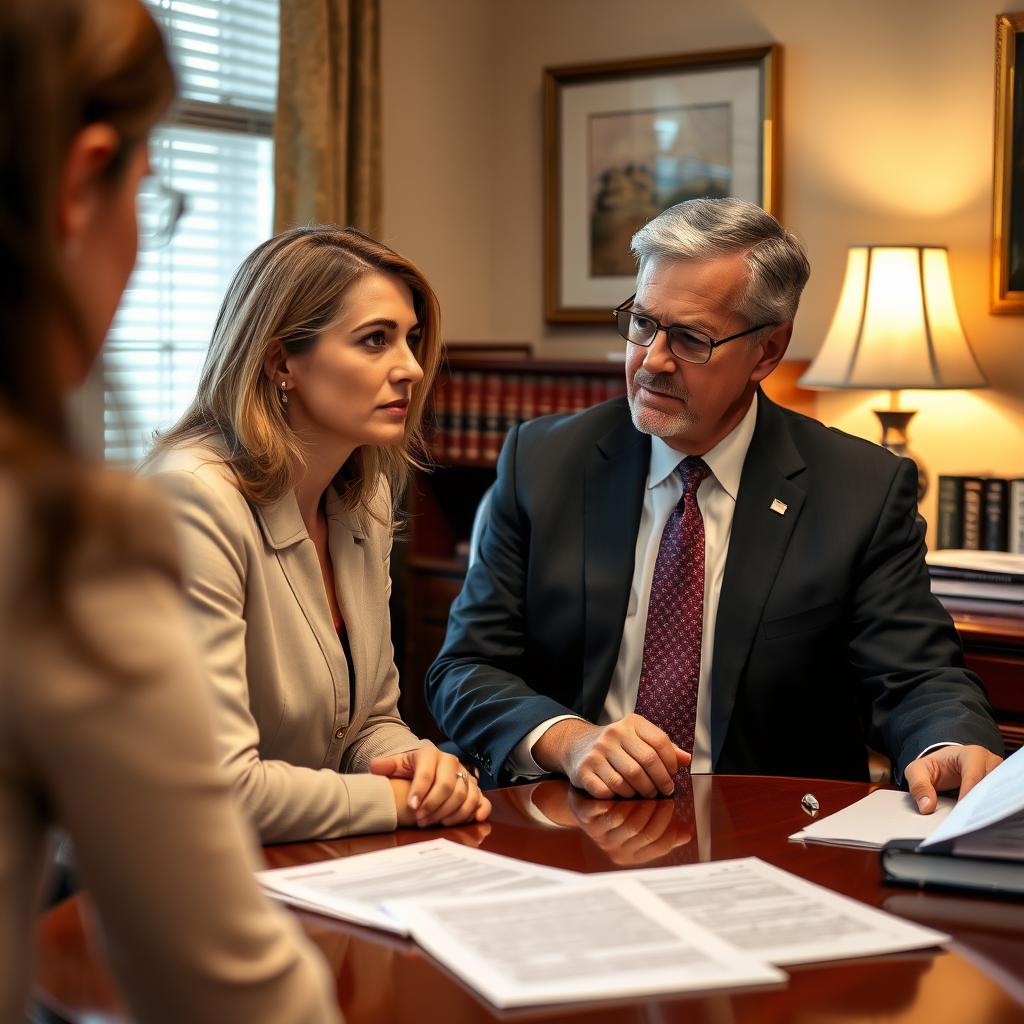
Permanent Alimony Lawyer Rappahannock County, VA
You have spent decades building a life in Rappahannock County — maybe on a farm outside Sperryville, or in a historic house in Washington — and now a proposed separation agreement lands on your kitchen table demanding indefinite spousal support. The numbers are staggering. You wonder how you can keep the farm, pay the mortgage, or fund your own retirement while sending a check every month with no end date. At Law Offices Of SRIS, P.C., Mr. Sris and the firm’s Of Counsel attorneys regularly appear in Rappahannock County Circuit Court to challenge exaggerated permanent‑alimony claims, present the real financial picture, and work to secure a fair, supportable result for the paying spouse. Call (888) 437‑7747 to request a consultation. Law Offices Of SRIS, P.C. – Advocacy Without Borders.
How We Approach Permanent Alimony in Rappahannock County
Permanent alimony, also called indefinite spousal support, is not a foregone conclusion. Virginia courts may award indefinite maintenance only after considering thirteen statutory factors set out in Va. Code § 20‑107.1, including the duration of the marriage, each party’s earning capacity, and the standard of living established during the marriage. Our strategy begins with a thorough dissection of the opposing party’s claim: we scrutinize the claimed monthly need, the recipient’s actual ability to work, and any unstated income or hidden assets that might reduce or eliminate the need for permanent support.
When negotiation is productive, we draft or revise settlement provisions that cap spousal support in duration or amount, and we tie termination events — remarriage, cohabitation in a relationship analogous to marriage, or a specified future date — directly into the agreement. If the case goes to hearing in the Rappahannock County Circuit Court, we present focused vocational and financial evidence to demonstrate that the requesting spouse can become self‑supporting with reasonable retraining or employment, and that a permanent award would be inequitable under the specific facts. Every case is grounded in the actual numbers, not in generalized assumptions about need.
What to Expect When Facing Permanent Alimony Demands
Most permanent‑alimony disputes arise in the context of a contested divorce. After the complaint is filed, either party may seek a pendente lite hearing for temporary support. The timeline to that initial hearing depends on the court’s docket; in Rappahannock County, the Circuit Court typically sets pendente lite matters within several weeks of the motion. During that hearing, the judge considers immediate needs — mortgage payments, utilities, health insurance — and sets a temporary amount that preserves the status quo while the case proceeds.
Discovery follows. We exchange financial statements, tax returns, pay stubs, and expert reports. Vocational evaluations are often central: an experienced attorney retained by the firm will assess the recipient’s work history, education, and current job‑market opportunities, producing a report that directly addresses the statutory factors. Mediation is available but not mandatory in Virginia, and many Rappahannock County cases resolve through a combination of informal negotiation and a mediated settlement conference. If trial is unavoidable, the court will hear the evidence and make a determination under the thirteen factors; a final order may be appealed under the Virginia appellate rules. Throughout the process, Mr. Sris and the firm’s Of Counsel attorneys keep you informed of each development and the likely range of outcomes.
Consequences of a Permanent Alimony Order
Indefinite spousal support, once ordered, burdens the paying spouse for an unpredictable future. The obligation does not automatically end at retirement; it can be modified only on a showing of a material change in circumstances, and the burden is on the party seeking the change. A recipient who refuses to work may continue to collect support for years, and enforcement mechanisms — wage garnishments, show‑cause hearings, even contempt proceedings — are strong. A poorly negotiated or litigated permanent‑alimony award can consume a substantial share of future earnings, prevent a clean financial break, and strain the ability to support a second family.
The Rappahannock County Circuit Court has the authority to award lump‑sum spousal support or to order periodic payments. In complex estates that include farm assets, business interests, or retirement accounts, characterizing income and valuing marital property correctly often dictates the support outcome. Because a permanent‑alimony award is subject to modification, the language of the final decree matters enormously — a poorly worded “non‑modifiable” clause can leave the paying spouse trapped while a properly drafted termination event can provide certainty. Mr. Sris and the firm’s Of Counsel attorneys pay meticulous attention to the decree language, to the exhibit schedules enumerating assets and debts, and to the presentation of vocational evidence, all of which shape the long‑term financial picture.
About Mr. Sris and the Firm’s Of Counsel Attorneys
Mr. Sris founded Law Offices Of SRIS, P.C. in 1997 and has focused a substantial portion of his multi‑state practice on complex family law matters, including high‑stakes spousal‑support litigation. His background as a former prosecutor brings a disciplined, evidence‑based approach to every case. The firm’s Of Counsel attorneys — each with extensive experience in Virginia family law — contribute additional strength in discovery, motion practice, and courtroom advocacy. Together, they have documented case results across a wide range of practice areas. Results may vary.
Mr. Sris testified before the Virginia House Courts of Justice Committee in support of 2019 HB 635 (chief patron Del. David Bulova). That testimony directly connects the firm to the Commonwealth’s equitable‑distribution framework, and the firm consistently applies that inside understanding of Virginia Code § 20‑107.3 and § 20‑107.1 in alimony disputes.
Frequently Asked Questions
What is permanent alimony in Virginia?
Permanent alimony, called indefinite spousal support, is a court‑ordered payment obligation with no fixed termination date, typically reserved for long‑term marriages or situations where the recipient cannot reasonably become self‑supporting. Virginia courts weigh thirteen statutory factors under Va. Code § 20‑107.1, including the standard of living during the marriage, the parties’ ages and health, and the contributions each made to the family’s well‑being. An award of permanent support does not mean the amount can never change; it remains subject to modification on a showing of a material change in circumstances.
How does the Rappahannock County Circuit Court decide whether to award permanent alimony?
The court reviews the evidence under the thirteen factors listed in the Virginia spousal‑support statute, focusing on the requesting spouse’s need and the other spouse’s ability to pay. The length of the marriage is often the most heavily weighted factor because a decades‑long union raises a presumption that a permanent award may be appropriate. However, vocational evidence showing the recipient can work, or an equal‑earning history, can rebut that presumption and lead the court to deny indefinite support, order rehabilitative alimony for a set period, or set a lower payment amount.
Can a permanent alimony order be changed later if my circumstances change?
Yes, either party may petition the Rappahannock County Circuit Court for a modification based on a material change in circumstances that was not anticipated at the time of the original order. Common grounds include involuntary job loss, a significant change in income, retirement, or the recipient’s cohabitation in a relationship analogous to marriage. The party seeking the change must produce credible evidence, and the court retains discretion to increase, decrease, or terminate the support obligation.
Do I need a lawyer to fight a permanent alimony demand in Rappahannock County?
While you are not legally required to hire a lawyer, permanent‑alimony disputes involve intricate financial analysis and statutory factors, and the stakes are long‑term. A self‑represented litigant may miss critical valuation points, fail to request the right discovery, or settle for terms that are far less favorable than what a skilled advocate could achieve. Mr. Sris and the firm’s Of Counsel attorneys handle these matters regularly in Rappahannock County and bring both litigation experience and a working knowledge of the local court’s practices to each case.
What evidence helps defeat a permanent alimony claim?
Vocational‑expert testimony, detailed earning‑capacity reports, and thorough financial discovery are often decisive. We also examine the recipient’s work history, education, and any unreported income, and we present evidence of the paying spouse’s own financial obligations — mortgage, child support, retirement savings — to show that an indefinite award would create an unfair hardship. Demonstrating that the recipient has the ability to become self‑supporting, or that a rehabilitative period would suffice, is the central defense against permanent support.
What is the difference between rehabilitative and permanent alimony in Virginia?
Rehabilitative alimony is time‑limited, intended to allow the recipient to obtain education or training and become self‑sufficient, while permanent alimony has no set end date. Virginia courts favor rehabilitative support when the evidence shows the recipient can become employable with effort. Permanent support is reserved for cases where, even after a reasonable period of training or job‑seeking, self‑sufficiency is unlikely due to age, health, or the length of the marriage.
How long does a permanent alimony case take in Rappahannock County?
The duration depends on the complexity of the case, the completeness of discovery, and the court’s docket. A straightforward case that settles early may resolve within several months; a heavily contested matter with expert witness disputes and a full trial can extend significantly longer. Mr. Sris and the firm’s Of Counsel attorneys work to advance the case efficiently while ensuring no critical evidence is overlooked.
What should I bring to my initial consultation about permanent alimony?
Bring your most recent tax returns, pay stubs, a list of monthly living expenses, and any separation agreement or draft proposal you have received. Also helpful are copies of mortgage statements, retirement‑account statements, and a brief written chronology of the marriage. Having these documents on hand allows the attorney to give you a realistic assessment of your exposure and the options available to you.
For guidance on your specific situation, reach Law Offices Of SRIS, P.C. at (888) 437‑7747.
Exploring related resources: Fairfax County family law lawyer · Prince William County family law lawyer · Manassas family law lawyer
Virginia primary sources: Virginia Code Title 20 (Domestic Relations) · Rappahannock County Circuit Court · Virginia Judicial System
Law Offices Of SRIS, P.C. — Fairfax Location
4008 Williamsburg Court, Fairfax, VA 22032
By appointment. Call (888) 437‑7747 to schedule.
Serving clients in Rappahannock County communities including Washington, Sperryville, and Flint Hill.
Attorney advertising. Prior results do not guarantee a similar outcome. Case results depend on a variety of factors unique to each case. Results may vary.