
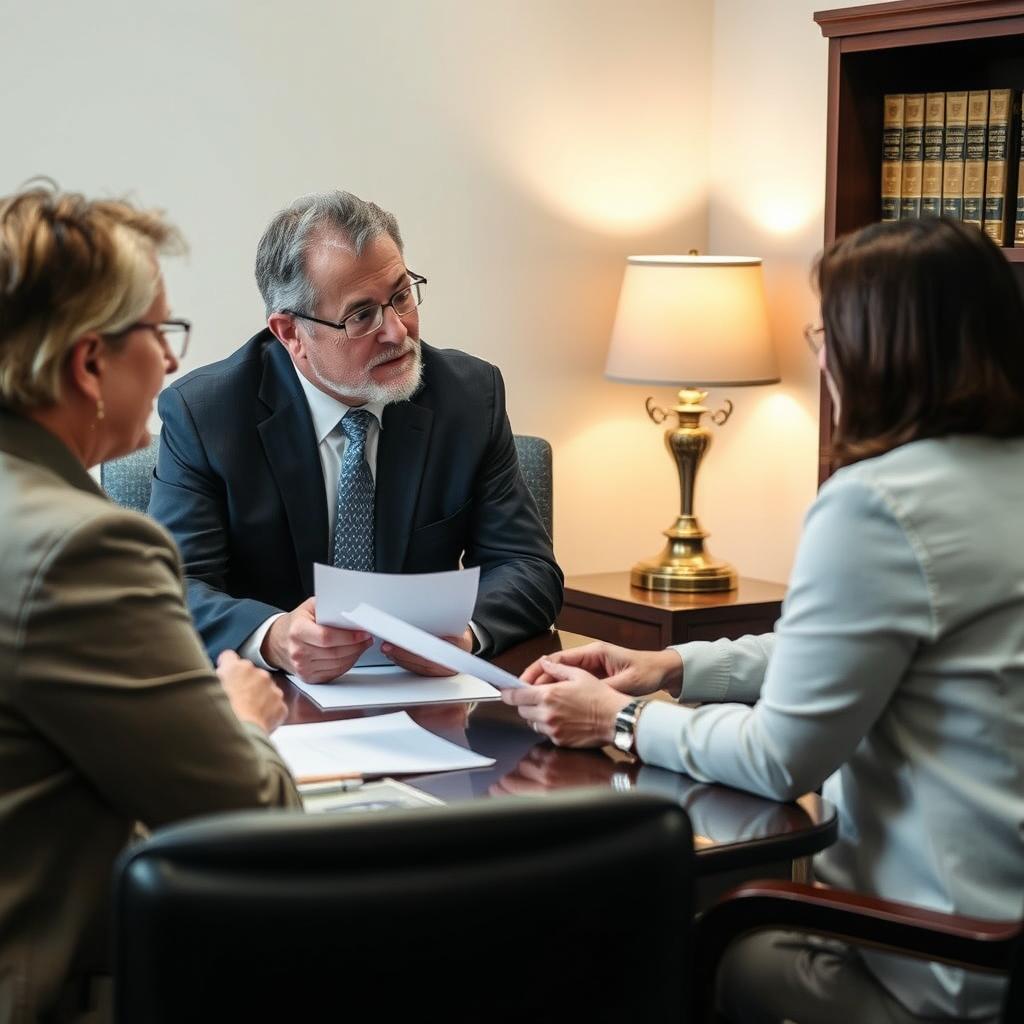
Norfolk Military Divorce Lawyer Roanoke County, VA
If you are a service member or military spouse seeking a divorce in Virginia, the intersection of state law and federal military provisions requires experienced legal guidance. Law Offices Of SRIS, P.C., founded in 1997, concentrates in family law matters across Virginia, including military divorce cases arising in Norfolk and Roanoke County. Virginia is an equitable distribution state under Va. Code § 20-107.3, and a no‑fault divorce is available after a six‑month separation (with no minor children and a signed agreement) or a one‑year separation under Va. Code § 20‑91. Mr. Sris and his Of Counsel represent service members and civilian spouses, addressing pension division under the Uniformed Services Former Spouses’ Protection Act, child custody, spousal support, and the procedural protections of the Servicemembers Civil Relief Act. India is not a signatory to the 1980 Hague Convention on Civil Aspects of International Child Abduction. For a consultation, reach the firm at (888) 437‑7747. Law Offices Of SRIS, P.C. – Advocacy Without Borders.
Military Divorce Representation in Norfolk and Roanoke County, Virginia
Norfolk and Roanoke County each host active military communities—Norfolk is home to the world’s largest naval base, and Roanoke County is part of the Roanoke metropolitan area with families connected to service across multiple branches. Mr. Sris and his Of Counsel represent service members and their spouses in divorce proceedings filed in the appropriate circuit courts: the Norfolk Circuit Court or the Roanoke County Circuit Court, located at 305 East Main Street, Salem, Virginia. Because Virginia law governs the divorce, property division, and support, military families benefit from working with an attorney thoroughly familiar with both Virginia’s domestic relations code and federal military retirement and protection laws, including the Uniformed Services Former Spouses’ Protection Act (USFSPA) and the Servicemembers Civil Relief Act (SCRA).
No‑fault divorce in Virginia under Va. Code § 20‑91 requires a separation period of one year, or six months if the parties have no minor children and have signed a separation agreement. Virginia is an equitable distribution state, meaning marital assets—including military retired pay subject to the USFSPA—are divided fairly but not necessarily equally after considering the factors in Va. Code § 20‑107.3. The SCRA allows a default stay of proceedings when service of process cannot be effected due to military service, and it may also toll or extend certain filing deadlines. Where children are involved, a Virginia court decides custody under the ten best‑interest factors of Va. Code § 20‑124.3. Mr. Sris and his Of Counsel navigate these provisions and work to structure settlement agreements or litigate contested matters when necessary.
Under Va. Code § 20‑91, a no‑fault divorce in Virginia requires a separation period of either six months (if no minor children and a signed separation agreement) or one year.
Source: Va. Code § 20‑91. Va. Code § 20‑91
Reviewed by Mr. Sris, admitted in VA/MD/DC/NJ/NY.
Frequently Asked Questions
How does a military divorce differ from a civilian divorce in Virginia?
A military divorce in Virginia follows the same state laws as a civilian divorce, but federal statutes—especially the USFSPA and the SCRA—add unique requirements for pension division, procedural stays, and service of process on active‑duty members. The Virginia circuit court retains jurisdiction over the grounds, property division, custody, and support. However, the Uniformed Services Former Spouses’ Protection Act authorizes Virginia courts to treat disposable military retired pay as divisible marital property under Va. Code § 20‑107.3. Additionally, the Servicemembers Civil Relief Act may permit an automatic 90‑day stay of proceedings when the service member’s military duties materially affect the ability to participate in the litigation. Understanding both state and federal frameworks is essential to protecting the rights of both the service member and the civilian spouse.
Can I file for divorce in Virginia if my spouse is stationed in Norfolk but we live in Roanoke County?
Yes, so long as you or your spouse meets Virginia’s six‑month residential and domiciliary requirement under Va. Code § 20‑97. Virginia law requires that at least one party be an actual bona fide resident and domiciliary of the Commonwealth for six months immediately before filing. If you reside in Roanoke County and your spouse is stationed at Naval Station Norfolk, the divorce may be filed in the circuit court of the county where either party resides. A military member may also claim Virginia as a state of legal residence even if stationed elsewhere. Mr. Sris and his Of Counsel can help determine the proper venue and navigate the filing requirements in Roanoke County Circuit Court or Norfolk Circuit Court.
How does the Servicemembers Civil Relief Act (SCRA) affect a military divorce?
The Servicemembers Civil Relief Act can stay court proceedings, extend deadlines, and affect default judgments when a service member’s military duties materially interfere with participation in a divorce case. Under the SCRA, a service member on active duty may request a stay of judicial proceedings for at least 90 days if the member can show that military service materially affects the ability to appear. The court may grant additional stays upon application. The SCRA also protects service members from default judgments by requiring the plaintiff to file an affidavit stating whether the defendant is in military service before the court can enter a default. Mr. Sris and his Of Counsel are experienced in handling military divorce cases and ensure that the procedural protections of the SCRA are observed.
How are military pensions divided in a Virginia divorce?
Virginia courts treat the marital share of military retired pay as marital property subject to equitable distribution under Va. Code § 20‑107.3, provided the requirements of the Uniformed Services Former Spouses’ Protection Act (USFSPA) are met. Under the USFSPA, a state court may divide disposable retired pay only if it has jurisdiction over the service member—usually by reason of residence, domicile, or consent. Virginia then applies its equitable distribution factors to determine what portion of the pension is marital and how it should be allocated between the former spouses. The division is typically expressed as a percentage of the marital share, enforceable through a military retired pay division order. The Survivor Benefit Plan (SBP) coverage may also be addressed during the divorce.
What grounds for divorce are available to military families in Virginia?
Virginia recognizes both fault‑based and no‑fault grounds for divorce under Va. Code § 20‑91, and military families may proceed under any applicable ground. Fault grounds include adultery, cruelty, willful desertion for one year, and conviction of a felony with imprisonment for more than one year. No‑fault grounds require living separate and apart without cohabitation for one year, or for six months if there are no minor children and the parties have executed a separation agreement. Military deployments or temporary duty assignments do not automatically interrupt the separation period if the parties have established separate living arrangements. Mr. Sris and his Of Counsel can advise on which ground best fits the family’s circumstances.
How long does a military divorce take in Roanoke County?
The timeline for a military divorce in Roanoke County depends on whether the divorce is uncontested, the complexity of property division, and any SCRA stays that may be invoked. An uncontested divorce where both parties agree on all terms—and no SCRA stay is needed—may be finalized in a matter of months after the separation period runs and the settlement is presented. Contested matters involving disputed custody, support, or division of substantial military benefits can extend the process. Because the Roanoke County Circuit Court has a regular docket and the involvement of federal military pay provisions can add steps, it is important to plan the case with realistic expectations.
Do I need an attorney experienced with military divorce?
While Virginia law does not require a lawyer for divorce, the unique interplay between state domestic relations law and federal military statutes makes it advisable to work with an attorney experienced in military divorce. Military divorce involves the USFSPA, SCRA, the Survivor Benefit Plan, and service‑specific regulations that are unfamiliar to many practitioners. An attorney who understands these laws can help ensure that all jurisdictional requirements are satisfied, that military retired pay is correctly valued and divided, and that the service member’s procedural rights are protected. Mr. Sris and his Of Counsel bring extensive experience in military family law matters across Virginia.
Can I still get divorced if my spouse is deployed overseas?
Deployment does not prevent a divorce from proceeding, but the Servicemembers Civil Relief Act may allow the deployed service member to request a stay of the proceedings. A civilian spouse may file for divorce in Virginia and serve the service member at the deployment address or through alternative means permitted by the court. If the deployed spouse cannot participate due to military obligations, the SCRA allows the court to stay the case for at least 90 days and potentially longer. In some cases, the divorce can move forward if the service member waives the stay or if the stay period expires. Mr. Sris and his Of Counsel can explore the available options consistent with the SCRA.
What child custody considerations apply when one parent is in the military?
Virginia courts apply the same best‑interests factors to military families, but the possibility of deployment, relocation, and the need for a family care plan are additional considerations the court may weigh. Under Va. Code § 20‑124.3, the court evaluates ten factors including each parent’s role in the child’s life, the child’s needs, and the ability to support a relationship with the other parent. For a service member, the court may also consider the military parent’s availability due to deployment, the feasibility of a parenting plan that accommodates military obligations, and the existence of a family care plan that designates a caregiver during absences. Joint custody can be awarded when it serves the child’s best interests.
How does spousal support work when one spouse is a service member?
Spousal support in Virginia is determined under Va. Code § 20‑107.1 based on the needs of the requesting spouse and the other spouse’s ability to pay, without special treatment due to military status. The court examines thirteen statutory factors, including the marriage’s duration, the standard of living, the earning capacities of the parties, and the contributions of each spouse to the family. Military pay, allowances, and other compensation are considered income for support purposes. A share of military retired pay awarded in property division may also affect the support analysis. Mr. Sris and his Of Counsel can help present a clear picture of the service member’s full compensation to assist the court in reaching a fair award.
About Mr. Sris and His Of Counsel Team
Mr. Sris, Owner and Founder of Law Offices Of SRIS, P.C., founded the firm in 1997 and concentrates his practice in family law, including complex military divorce matters. A former prosecutor, he is admitted in Virginia, Maryland, the District of Columbia, New Jersey, and New York. His Of Counsel team consists of experienced attorneys who have handled a wide range of family law disputes. Over 120 years of combined legal experience between Mr. Sris and his Of Counsel, with over 4,739 documented firm-wide results. Results may vary. For a confidential consultation, reach the firm at (888) 437‑7747.
Attorney advertising. Prior results do not guarantee a similar outcome. Results may vary.
Case results depend on a variety of factors unique to each case.