
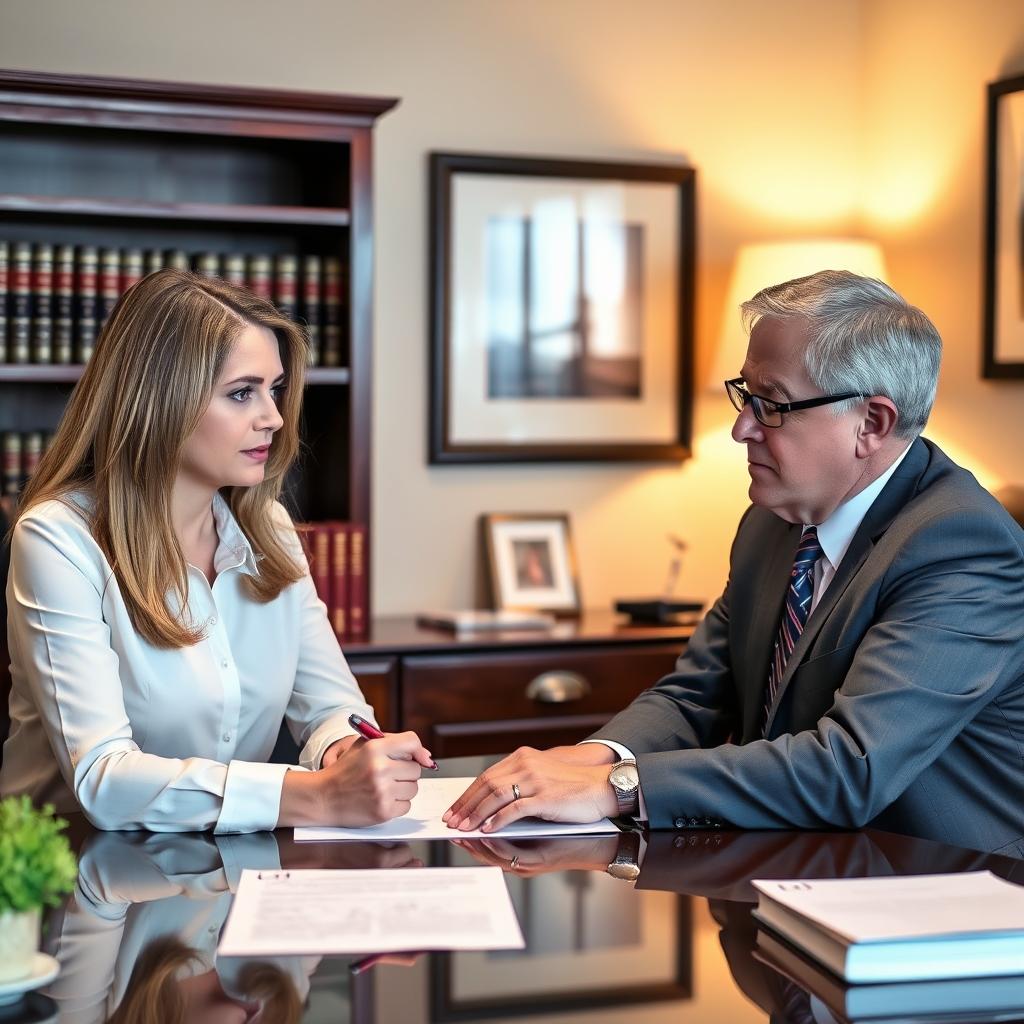
Marital Agreement Lawyer Rappahannock County, VA
You and your partner are planning your future together and your conversation turns to financial clarity. You may be preparing to marry and considering a prenuptial agreement, or you are already married and want to formalize your understanding in a postnuptial or separation agreement. In Rappahannock County, Virginia, marital agreements are governed by the Virginia Premarital Agreement Act (Va. Code § 20‑147 et seq.) and general contract principles. These agreements can define property rights, spousal support obligations, and how assets will be divided if the marriage ends, but they must meet Virginia’s statutory requirements and equitable distribution standards. A marital agreement drafted without full awareness of the Virginia equitable distribution framework or the specific evidentiary rules applied by Rappahannock County Circuit Court can face challenges down the road. Clients in Washington, Sperryville, and Flint Hill often reach out when they want an agreement that reflects their intentions while holding up under judicial scrutiny. Mr. Sris, Owner and Founder of Law Offices Of SRIS, P.C., and the firm’s Of Counsel attorneys represent individuals drafting, reviewing, or enforcing marital agreements across Rappahannock County. For a consultation, call (888) 437‑7747. Law Offices Of SRIS, P.C. – Advocacy Without Borders.
What a Marital Agreement Means in Rappahannock County, Virginia
Rappahannock County lies within the Twentieth Judicial District of Virginia, and its circuit court at 250 Gay Street, Suite 1, Washington, VA 22747, hears divorce, equitable distribution, and related marital contract disputes. The Rappahannock County Juvenile and Domestic Relations District Court handles separate custody and support matters, but the circuit court is where the validity and enforcement of a prenuptial, postnuptial, or separation agreement is typically adjudicated. Understanding the local court’s approach matters because Virginia’s equitable distribution statute (Va. Code § 20‑107.3) requires that marital agreements be fair, voluntary, and supported by a reasonable disclosure of assets and liabilities. A judge in Rappahannock County will apply the same statutory factors—duration of the marriage, contributions of each party, and the circumstances surrounding the agreement’s formation—to decide whether an agreement should be upheld.
Marital agreements in this rural county often involve family farms, small businesses, or inherited land—assets whose value may be contested or intertwined with family history. Because Rappahannock County shares judges with neighboring Fauquier and Loudoun counties through the Twentieth Judicial District, local practice may reflect a familiarity with agricultural and family‑enterprise valuations. An agreement that simply lists assets without accounting for how a Rappahannock County court would classify and value those interests under Virginia law can leave both parties unprotected. For these reasons, clients benefit from working with an attorney who understands how Rappahannock County family law matters are handled in the broader circuit court context.
How Mr. Sris and the Firm’s Of Counsel Attorneys Handle Marital Agreement Cases
Mr. Sris and the firm’s Of Counsel attorneys approach every marital agreement with the understanding that it must both reflect the parties’ intentions and satisfy Virginia’s statutory standards. This begins with a thorough discussion of what the agreement intends to accomplish—which assets are separate, how marital property will be classified, and whether spousal support will be waived or modified. The drafting process involves careful application of the Virginia Premarital Agreement Act, which requires that a premarital agreement be in writing and signed by both parties. For postnuptial agreements, the court scrutinizes the conscionability of the terms and the absence of coercion, especially if the agreement was signed after a marital dispute arose.
When a client needs to enforce an existing agreement, the firm examines the circumstances under which it was executed—whether both parties had independent legal counsel, whether there was full financial disclosure, and whether any changed circumstances make enforcement inequitable under Virginia law. The Rappahannock County Circuit Court will not simply rubber‑stamp a marital agreement; it will evaluate its fairness at the time of enforcement. Mr. Sris and the firm’s Of Counsel attorneys prepare clients for this scrutiny by building a record that supports the agreement’s validity and negotiating terms that anticipate the court’s equitable distribution analysis. They also guide clients through mediation or collaborative law options when a dispute over an agreement can be resolved outside litigation.
About Mr. Sris and the Firm’s Of Counsel Attorneys
Mr. Sris, Owner and Founder of Law Offices Of SRIS, P.C., established the firm in 1997. A former prosecutor, he practices in Virginia, Maryland, the District of Columbia, New Jersey, and New York. Mr. Sris testified before the Virginia House Courts of Justice Committee in support of 2019 HB 635 (chief patron Del. David Bulova), a bill that addressed equitable distribution procedures. His experience in family law matters includes the drafting and litigation of marital agreements across Northern Virginia. Mr. Sris and the firm’s Of Counsel attorneys bring extensive combined legal experience in family law. Results may vary.
The firm’s Of Counsel attorneys are independently contracted, experienced practitioners who appear in Rappahannock County courts. They handle family law matters including negotiation, mediation, and trial of marital agreement disputes. The collective background of the firm includes prior service as a former Maryland Assistant State’s Attorney and a former Virginia State Trooper, offering clients insight into both civil litigation strategy and the investigative mindset that can uncover hidden assets or inconsistencies in financial disclosures. All work is coordinated with Mr. Sris, ensuring that each marital agreement matter receives careful attention from legal professionals familiar with Virginia’s equitable distribution and contract principles.
Frequently Asked Questions
Do I need an attorney to write a marital agreement in Rappahannock County?
While Virginia law does not require you to have an attorney, a marital agreement that is challenged in Rappahannock County Circuit Court must meet strict legal standards that are difficult to satisfy without legal guidance. The Virginia Premarital Agreement Act demands a voluntary, fair agreement supported by reasonable financial disclosure. If one party later claims they did not understand their rights or that the agreement is unconscionable, a judge will examine the process of its creation. An experienced attorney can draft the agreement to withstand such scrutiny, advise on the classification of assets under Virginia’s equitable distribution law, and ensure that both parties’ interests are protected in a way that a self‑drafted document often cannot.
What is the difference between a prenuptial and a postnuptial agreement in Virginia?
A prenuptial agreement is signed before marriage and becomes effective upon marriage; a postnuptial agreement is signed after the marriage has already occurred. Both are governed by the Virginia Premarital Agreement Act (Va. Code § 20‑147 et seq.) and must be in writing. Prenuptial agreements typically address property division and spousal support in the event of divorce or death and must be entered into voluntarily with full disclosure. Postnuptial agreements face heightened scrutiny in Rappahannock County courts, particularly if they were executed during a period of marital discord. Courts may require evidence that the agreement was conscionable at signing and that no coercion was present.
Can a Rappahannock County court throw out a marital agreement?
Yes, a Rappahannock County Circuit Court can set aside a marital agreement if it finds the agreement was not entered into voluntarily, was unconscionable when signed, or was based on incomplete or fraudulent financial disclosure. Virginia law treats marital agreements as contracts, but equitable distribution principles overlay them. If a party can show they did not have independent legal counsel, that they were pressured, or that significant assets were hidden, the court may declare the agreement void. For this reason, the drafting process must be handled carefully, with both sides receiving competent legal advice and a clear record of disclosure.
How does equitable distribution affect a separation agreement in Virginia?
A separation agreement resolves property division and support outside of court, but a Rappahannock County judge will still review it for fundamental fairness under Va. Code § 20‑107.3 if it is incorporated into a final divorce decree. Even when both spouses agree, the court must find that the agreement is not unconscionable and that it reasonably divides marital assets and debts. The agreement must address the classification of separate property, the division of any retirement accounts or pension interests, and spousal support in a clear, enforceable manner. An attorney can structure the agreement so that it reflects the parties’ wishes while satisfying the court’s equitable distribution review.
What should I bring to a consultation about a marital agreement?
You should bring a list of your assets and debts, including approximate values, any existing estate planning documents, and information about your spouse’s separate and marital property. Providing a complete financial picture allows the attorney to assess what disclosures must be made and what terms are appropriate under Virginia law. For Rappahannock County clients, documentation related to real estate, family business interests, or inheritance is especially important because these assets often form the core of a marital estate. A consultation with Mr. Sris and the firm’s Of Counsel attorneys can clarify what provisions are permissible and advisable for your situation.
For a consultation, reach Mr. Sris and the firm’s Of Counsel attorneys at (888) 437‑7747.
Fairfax County Family Law Lawyer | Prince William County Family Law Lawyer | Loudoun County Family Law Lawyer
Virginia Code Title 20 (Domestic Relations) | Rappahannock County Circuit Court
Attorney advertising. Prior results do not guarantee a similar outcome. Results may vary.
Case results depend on a variety of factors unique to each case.