
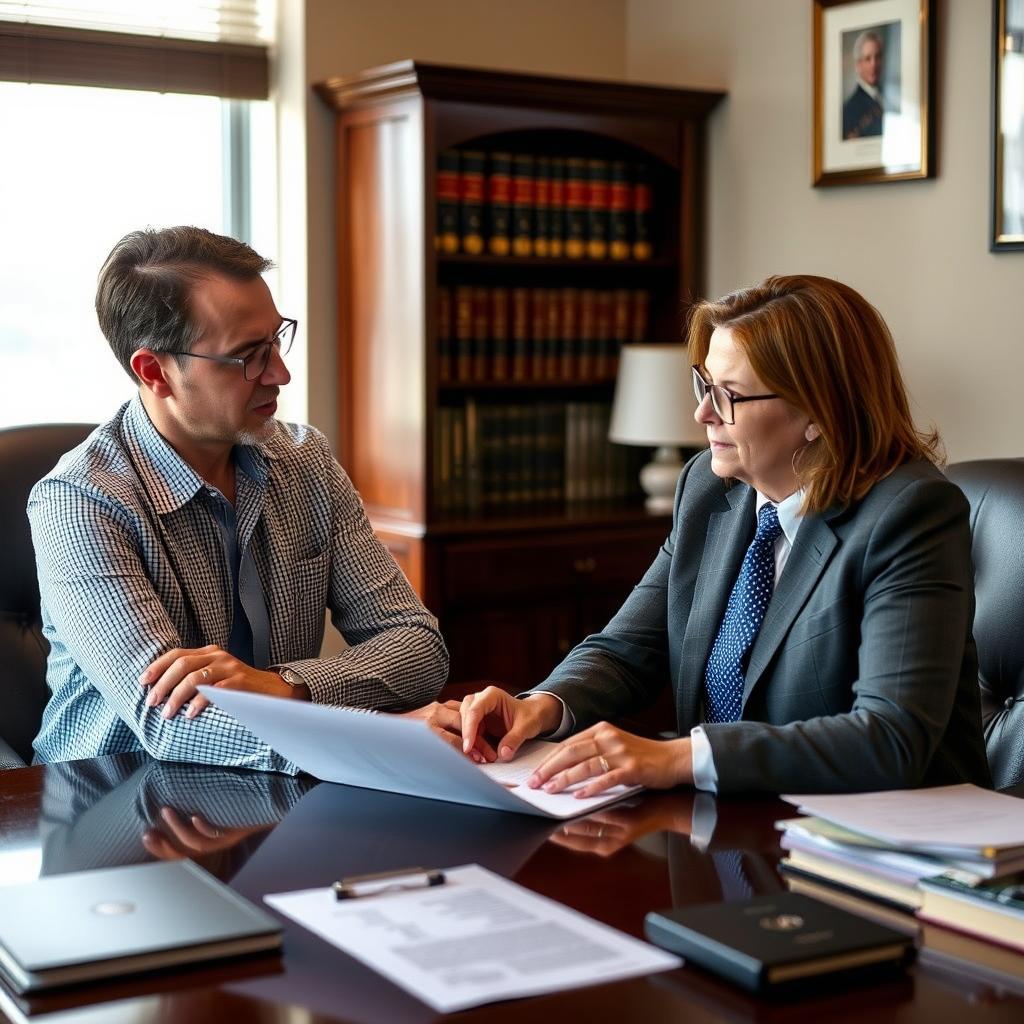
Beach Military Divorce Lawyer York County, VA
For service members and military families stationed near Virginia Beach, navigating a divorce introduces unique legal considerations that civilian couples rarely encounter. The Servicemembers Civil Relief Act (SCRA), federal rules governing the division of military retired pay, and Virginia’s equitable distribution framework all come into play. At Law Offices Of SRIS, P.C., Mr. Sris and his Of Counsel team concentrate on family law matters, including military divorces in York County and throughout the Hampton Roads region. The firm’s Richmond location regularly serves clients whose cases are filed in the York County Circuit Court and the York County Juvenile & Domestic Relations District Court—the two courts that handle divorce, custody, and support proceedings at 300 Ballard Street in Yorktown. A divorce involving a military pension, deployment schedules, custody arrangements across state lines, or jurisdictional issues between Virginia and another state requires experienced counsel who is familiar not just with Virginia Code § 20‑91 and § 20‑107.3, but also with the federal statutes that interact with them. Mr. Sris, Owner and Founder, has practiced family law since 1997 and works alongside Of Counsel attorneys who bring additional decades of courtroom experience. To discuss how your military divorce might proceed in York County, call (888) 437‑7747 to schedule a consultation. Law Offices Of SRIS, P.C. – Advocacy Without Borders.
What Is Beach Military Divorce in York County, Virginia?
The term “beach military divorce” refers to divorce proceedings involving active-duty service members, reservists, or military retirees whose cases arise in the coastal area around Virginia Beach, Norfolk, and the surrounding counties—including York County. These divorces follow the same Virginia procedural rules as any other divorce, but the military context adds layers that a family law attorney must untangle carefully. Under Va. Code § 20‑91, a Virginia divorce can be granted on no-fault grounds—after six months of separation if there are no minor children and a signed separation agreement, or after one year of separation otherwise—or on fault grounds such as adultery, cruelty, or desertion. For a military couple, establishing the separation period, proving residency, and serving the non-filing spouse who may be deployed or stationed elsewhere create practical challenges that a York County lawyer experienced in military family law can navigate. Virginia is an equitable distribution state, so marital property—including military retired pay divisible under the Uniformed Services Former Spouses’ Protection Act (USFSPA)—is divided fairly, not necessarily equally, based on the factors listed in Va. Code § 20‑107.3.
How a York County Military Divorce Lawyer Can Help
York County courts handle divorce filings, equitable distribution, spousal support, and, where children are involved, custody and child support. The York County Circuit Court at 300 Ballard Street has exclusive original jurisdiction over the divorce itself, while the Juvenile & Domestic Relations District Court addresses standalone custody, visitation, and support matters. Mr. Sris and his Of Counsel team appear regularly before these courts. For a military divorce, several practical steps must be taken beyond the ordinary procedural requirements. A deployed spouse may ask for a stay of proceedings under the SCRA, which can delay the case until they are available to participate. Division of a military pension requires a properly drafted order that complies with Defense Finance and Accounting Service (DFAS) regulations. If one spouse is a service member and the other is a civilian living in York County, establishing jurisdiction over both parties and serving process can become complicated. An experienced divorce attorney can file the appropriate pleadings, negotiate a separation agreement that addresses the military-specific assets, and, when necessary, litigate contested issues at trial. In every instance, the goal is to move the case toward a resolution that respects the service member’s obligations and the spouse’s rights while protecting children’s best interests under Va. Code § 20‑124.3.
Frequently Asked Questions
Can a service member stationed in Virginia get divorced in York County even if the spouse lives in another state?
Yes, a service member who is a Virginia resident and domiciliary for at least six months may file for divorce in York County, even if the spouse resides elsewhere, provided the court has personal jurisdiction over the respondent or the respondent consents. Virginia law requires that at least one party be a bona fide resident and domiciliary of Virginia for six months before filing. A military member who maintains a Virginia residence, votes in Virginia, or lists Virginia as their home of record can satisfy this requirement. If the other spouse is out-of-state, service of process must be accomplished according to Virginia’s long-arm statute and procedural rules. The SCRA may also apply to protect the service member’s rights. An attorney can evaluate the jurisdictional facts early to avoid dismissal.
What happens to military retirement pay in a York County divorce?
Military retired pay is treated as marital property subject to equitable distribution if the service member’s service overlapped with the marriage, as authorized by the Uniformed Services Former Spouses’ Protection Act, 10 U.S.C. § 1408. The York County Circuit Court can order the division of the marital share of the pension using the “coverture fraction”—the ratio of years of marriage overlapping military service to total years of service—applied to the disposable retired pay. A Domestic Relations Order must be prepared and approved by DFAS for direct payment to the former spouse. Factors under Va. Code § 20‑107.3, such as the duration of the marriage and the contributions of each party, guide the equitable distribution. Results may vary. and the specific terms of any settlement agreement or court order will control.
Can a deployed service member delay a divorce in York County?
Yes, under the Servicemembers Civil Relief Act, a deployed service member may request a stay of proceedings for a minimum of 90 days if military duties materially affect their ability to appear. The court can grant additional stays if the service member continues to be affected. The request must include a letter from the service member’s commanding officer stating that military duty prevents an appearance and that leave is not authorized. This stay does not dismiss the divorce—it merely pauses the litigation. A York County family law attorney familiar with the SCRA can advise both the service member and the civilian spouse on how the stay affects the timeline and what steps can be taken to prepare while the case is paused.
How does deployment affect child custody and visitation arrangements in a military divorce?
Virginia courts consider deployment as a factor in custody decisions and may create temporary custody orders that preserve the service member’s relationship with the child while the parent is deployed. Under Va. Code § 20‑124.3, the best interests of the child govern custody, and a parent’s deployment alone cannot be the sole basis for denying custody or visitation. A family court can appoint a temporary guardian or authorize a family member to exercise parenting time on behalf of the deployed parent. Upon the parent’s return, a motion to modify custody can be filed. A York County attorney can help craft a parenting plan that accommodates the military parent’s unpredictable schedule and preserves parental rights.
Do I need a lawyer to get a military divorce in York County?
You are not legally required to hire a lawyer to file for divorce in Virginia, but handling a military divorce without experienced counsel risks mistakes that can have lasting financial and parental consequences. Dividing a military pension, calculating survivor benefit plan coverage, navigating the SCRA, and addressing custody when one parent is subject to relocation require an understanding of both state and federal law. Proceeding without an attorney might result in an unfair property division, an unenforceable order, or unnecessary delays. Mr. Sris and his Of Counsel have extensive experience representing clients in York County family law matters. Contact Law Offices Of SRIS, P.C. at (888) 437‑7747 to discuss your circumstances.
How long does a military divorce take in York County?
The timeline varies significantly depending on whether the divorce is uncontested, contested, or involves complex property issues, but an uncontested military divorce with a signed separation agreement may be finalized within two to four months after filing, while contested cases can take nine to eighteen months or longer. The mandatory separation period required by Va. Code § 20‑91 must be completed before filing if proceeding on no-fault grounds. The York County Circuit Court’s docket, the extent of discovery, and any SCRA stays requested by a deployed spouse can influence the overall duration. Mr. Sris and his Of Counsel work to move cases forward efficiently while protecting each client’s rights.
Can a civilian spouse claim a portion of a military spouse’s housing allowance in a divorce?
A military housing allowance is not divisible as direct property, but it can be considered as income when calculating spousal support and child support under Virginia guidelines. The Basic Allowance for Housing (BAH) is a non-taxable benefit, and courts often treat it as part of the service member’s gross income for support calculations. The final support obligation will depend on combined incomes, the number of children, and the statutory factors under Va. Code §§ 20‑107.1 and 20‑108.1. An attorney can present the financial picture to the court to ensure support is based on accurate income figures.
What if the military spouse violates a custody or visitation order while deployed?
A violation of a court-ordered custody or visitation schedule can be addressed through a show cause petition in the York County Juvenile & Domestic Relations District Court, which handles enforcement and contempt proceedings. The court can modify the custody order, impose sanctions, or require makeup parenting time. When the violation is tied to deployment or a temporary relocation, the court will consider the military parent’s obligations. A family law attorney can file the necessary motions and present evidence of the violation. Timely action is important because the court will consider the child’s current circumstances.
Are there any special residency rules for military members filing for divorce in Virginia?
Military personnel stationed in Virginia can meet the residency requirement if they have been an actual bona fide resident and domiciliary of the Commonwealth for at least six months, even if their permanent home of record is in another state. The analysis focuses on the member’s intent to make Virginia their domicile—evaluated through driver’s license records, voter registration, tax filings, and other objective indicators. A service member who maintains a Virginia address and demonstrates ties to York County can often satisfy the requirement. An attorney can help confirm domicile before filing to avoid jurisdictional challenges.
Can a Virginia court divide a military pension if the marriage was brief and the service member retired long before the marriage?
Only the portion of the military retired pay that accrued during the marriage—the marital share—can be divided as marital property; the portion earned before the marriage or after separation is separate property. If the service member was already retired before the marriage, the pension would generally be treated as separate property unless marital funds were contributed to enhance it. The York County Circuit Court determines the classification under Va. Code § 20‑107.3. In a short marriage with no overlap of service and marriage, the pension may not be subject to division at all, though it could still be considered as a source of income for support purposes. Each case requires an individualized analysis.
Is mediation available for military divorces in York County, and should I consider it?
Mediation is available in York County family law cases and can help both parties resolve custody, support, and property issues without a trial, often saving time and expense. Virginia courts encourage alternative dispute resolution, and a separation agreement reached through mediation can form the basis for an uncontested divorce. Military divorces benefit from mediation because it allows the service member to participate via video conference if deployment or duty prevents in-person attendance. A York County attorney can advise on whether mediation is appropriate given the circumstances, prepare a client for the process, and review any agreement before it is signed to ensure it protects the client’s legal rights.
About Mr. Sris and His Of Counsel Team
Mr. Sris, Owner and Founder of Law Offices Of SRIS, P.C., has concentrated on family law and related practice areas since establishing the firm in 1997. He is a former prosecutor who brings extensive courtroom experience to divorce, custody, and equitable distribution matters. Mr. Sris testified before the Virginia House Courts of Justice Committee in support of 2019 HB 635 (chief patron Del. David Bulova). Alongside him, a team of Of Counsel attorneys—each with a decade or more of litigation experience—handles family law cases in York County and across Virginia. Mr. Sris and his Of Counsel bring over 120 years of combined legal experience to the firm’s family law practice. Results may vary. They have documented 4,739+ case results across all practice areas since 1997. in a particular case. Mr. Sris is admitted to practice in Virginia, Maryland, the District of Columbia, New Jersey, and New York.
Related pages: Family Law Attorney in James City County · Family Law Lawyer in Williamsburg · Fairfax County Family Law Attorney · Fairfax City Divorce Lawyer · Falls Church Family Lawyer
Virginia primary sources:
Virginia Code Title 20 (Domestic Relations) ·
York County Circuit Court ·
Virginia Circuit Courts
Attorney advertising. Prior results do not guarantee a similar outcome.
Results may vary.
Case results depend on a variety of factors unique to each case.