
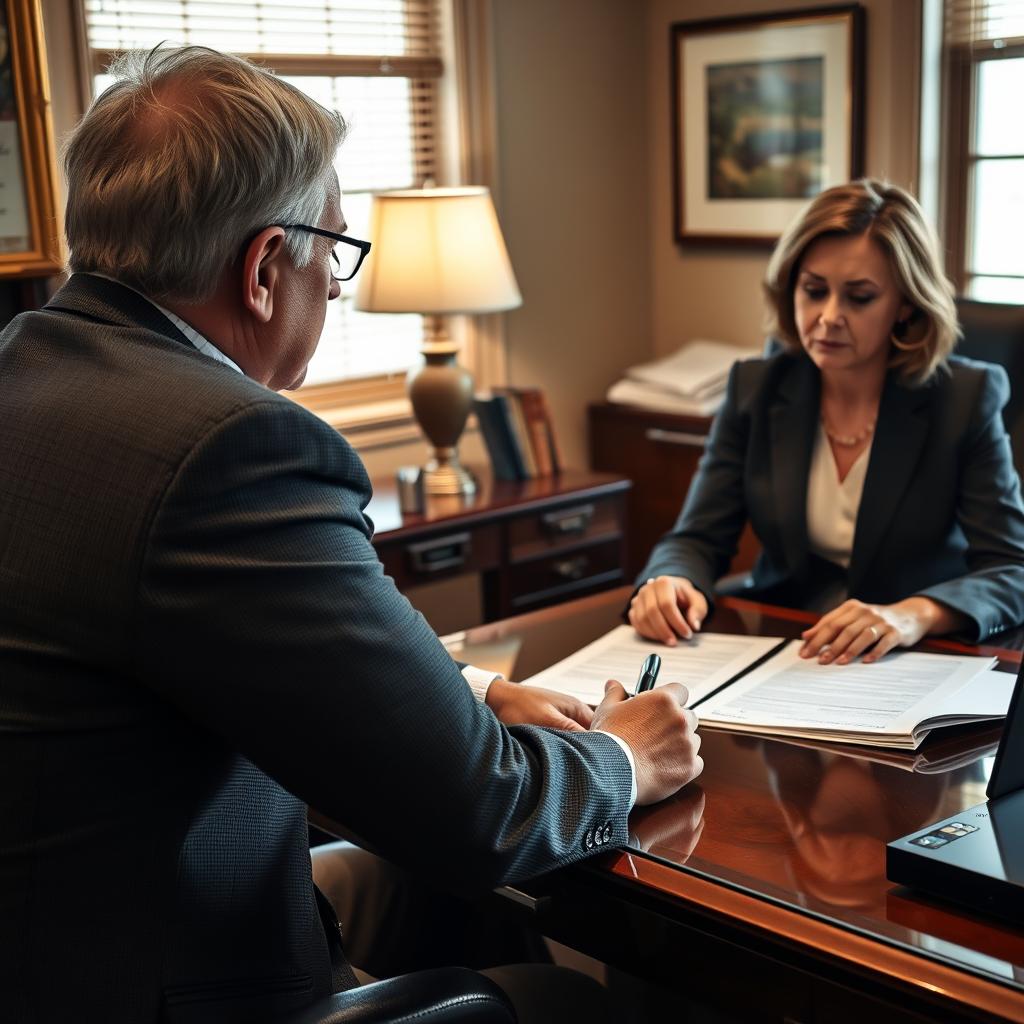
Alimony Modification Lawyer Fauquier County, VA
Alimony modification matters in Fauquier County proceed under Virginia’s statutory framework, principally Va. Code § 20‑107.1, which governs spousal support. Whether you are the party seeking a change to an existing support order or the party responding to a modification petition, the Fauquier County Circuit Court at 6 Court Street in Warrenton exercises jurisdiction over modification requests that arise from a final divorce decree. The court evaluates petitions based on a material change in circumstances—such as a substantial alteration in either party’s income, employment status, or cohabitation. Because modification turns on fact‑specific judicial determinations, presenting a well‑prepared position before the court is important. Law Offices Of SRIS, P.C., founded in 1997, represents clients throughout Fauquier County in alimony modification proceedings. To request a consultation, reach the firm at (888) 437‑7747. Law Offices Of SRIS, P.C. – Advocacy Without Borders.
What Alimony Modification Means in Fauquier County
In Virginia, alimony is termed spousal support, and a final order of support may be modified if the party seeking the change demonstrates a material change in circumstances that was not contemplated when the original order was entered. The Fauquier County Circuit Court handles modification petitions that are tied to a divorce decree, while the Fauquier County Juvenile and Domestic Relations District Court handles standalone support matters that are not connected to a divorce. Because Fauquier County is a rural and exurban community situated west of Fairfax and Prince William Counties, local practice often reflects the realities of commuter‑based family economics and the cost of living across Northern Virginia. A modification may involve a reassessment of either party’s income, earning capacity, reasonable expenses, or changes in cohabitation status. Virginia is an equitable distribution state, and spousal support determinations are informed by statutory factors, including the duration of the marriage, each party’s contributions to the family, and the current financial circumstances of both parties.
Fauquier County’s legal community is compact, and the Circuit Court docket reflects a mix of cases from Warrenton, New Baltimore, Bealeton, Marshall, and The Plains. Because the Twentieth Judicial District includes Fauquier County alongside other nearby counties, familiarity with regional judicial expectations can be an advantage when assembling a modification petition or defense. Evidence of changed circumstances must be documented and presented in a manner that meets Virginia’s evidentiary standards. An attorney who understands how both the Circuit Court and the Juvenile and Domestic Relations Court operate locally can help parties navigate procedural requirements efficiently.
How Mr. Sris and the Firm’s Of Counsel Attorneys Handle Alimony Modification Cases
When a client contacts Law Offices Of SRIS, P.C., about an alimony modification in Fauquier County, the process begins with a careful evaluation of the existing support order and the facts that support a claim of material change. The modification analysis under Va. Code § 20‑107.1 requires the court to weigh factors such as the current income of each party, earning capacity, any changes to marital property assignments, and whether a new cohabitation arrangement in a relationship analogous to marriage exists. Gathering documented evidence of income shifts, job loss, medical expenses, or changes in living situation is a preliminary step.
The firm’s approach emphasizes thorough preparation before filing. Whether the client is the petitioning party or the respondent, the legal team assesses whether the change in circumstances is substantial and durable enough to warrant court action. If negotiation or mediation is appropriate, counsel can engage with opposing counsel to explore a consent modification order, which can reduce the time and expense of litigation. When an agreement cannot be reached, the firm prepares for an evidentiary hearing before the Fauquier County Circuit Court. Throughout the process, the goal is to present a clear, fact‑based case that addresses each statutory factor the court considers. The timeline for resolution depends on the court’s calendar; contested matters generally require more time than agreed modifications.
About Mr. Sris and the Firm’s Of Counsel Attorneys
Mr. Sris, Owner and Founder of Law Offices Of SRIS, P.C., established the firm in 1997. A former prosecutor, Mr. Sris brings insight into courtroom procedure and evidence presentation to every family law matter the firm handles. He is admitted to practice in Virginia, Maryland, the District of Columbia, New Jersey, and New York. Mr. Sris testified before the Virginia House Courts of Justice Committee in support of 2019 HB 635 (chief patron Del. David Bulova).
The firm’s Of Counsel attorneys add experience across multiple subject areas, including family law, criminal defense, and civil litigation. The legal team brings extensive combined experience to alimony modification cases in Fauquier County. They work to achieve outcomes aligned with the client’s objectives while adhering to Virginia procedural rules. Results may vary. For a consultation, reach Law Offices Of SRIS, P.C. at (888) 437‑7747.
Frequently Asked Questions
What is required to modify alimony in Fauquier County, Virginia?
To modify alimony in Virginia, the requesting party must prove a material change in circumstances that was not foreseeable at the time of the original support order. Evidence may include a change in either party’s income, job loss, disability, retirement, or the payor’s cohabitation in a relationship analogous to marriage. The Fauquier County Circuit Court evaluates the request under Va. Code § 20‑107.1 by considering all relevant statutory factors. The party seeking modification carries the burden of proof. An attorney can assist in compiling the necessary financial documents and witness testimony to support the petition.
Do I need a lawyer for an alimony modification in Fauquier County?
You are not legally required to have a lawyer to file an alimony modification petition, but representing yourself can present challenges in gathering evidence and meeting procedural requirements. Virginia courts apply statutory factors and evidentiary rules that are complex to navigate without legal training. An attorney can help present income documentation, argue the material change in circumstances, and respond to the opposing party’s legal positions. Contacting an experienced family law attorney can help protect your rights and improve the organization of your case.
How long does an alimony modification case take in Fauquier County?
The time needed to resolve an alimony modification depends on whether the parties agree or the matter is contested, as well as the Fauquier County Circuit Court’s schedule. If both parties consent to a modified order, the process can be completed relatively quickly through a consent decree. Contested modifications that require an evidentiary hearing, discovery, and potentially expert testimony typically take longer. The court’s docket and the complexity of the financial issues directly affect the timeline. An attorney can help estimate a realistic timeframe based on the specifics of your case.
Can spousal support be terminated in Virginia?
Yes, spousal support may be terminated under certain conditions, including the remarriage of the recipient, death of either party, or a court finding of cohabitation in a relationship analogous to marriage. Under Va. Code § 20‑109, support may also be terminated if the support order so provides, such as when the recipient has become self‑supporting or upon the occurrence of a defined event. A termination petition, like a modification petition, must be supported by evidence of a material change in circumstances and is filed in the Fauquier County Circuit Court.
What factors does the Fauquier County court consider when modifying alimony?
The court considers the factors listed in Va. Code § 20‑107.1, including the current income and earning capacity of each party, the duration of the marriage, the standard of living during the marriage, and any contributions one spouse made to the other’s education or career advancement. The court also looks at the needs of each party and the ability of the paying spouse to continue making support payments. If a change in circumstances is found, the court may increase, decrease, or terminate spousal support. A well‑documented presentation of each factor can influence the outcome.
Additional resources:
Virginia Code Title 20 (Domestic Relations) —
Virginia Judicial System
Attorney advertising. Prior results do not guarantee a similar outcome.
Reviewed by Mr. Sris, Owner and Founder
Admitted in Virginia, Maryland, District of Columbia, New Jersey, and New York
Practicing since 1997
Case results depend on a variety of factors unique to each case.