
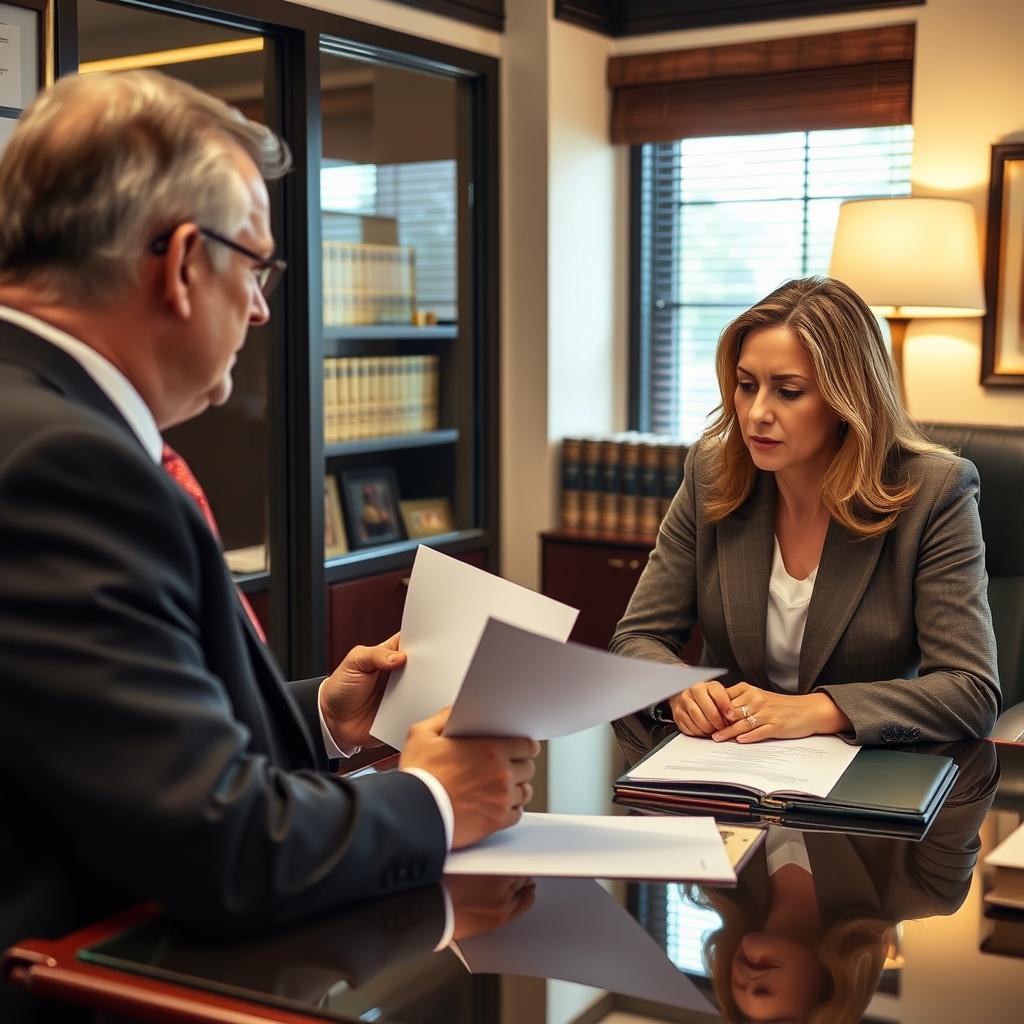
Equitable Distribution Lawyer Rockingham County, VA
Dividing marital property during a divorce is a process that can affect your financial standing for years. Virginia follows an equitable distribution model under Virginia Code § 20-107.3, which means the court seeks a fair—but not necessarily equal—division of assets and debts. The Rockingham County Circuit Court, located at 53 Court Square in Harrisonburg, is the court with exclusive jurisdiction over divorce and property division matters in Rockingham County. Cases involving a family home, retirement accounts, a business, or significant debt require careful identification and valuation of each asset. The circuit court has the authority to separate marital property from separate property and to distribute the marital estate after considering eleven statutory factors, including the duration of the marriage, each spouse’s contributions, and the circumstances that led to the divorce. Mr. Sris, the Owner and Founder of Law Offices Of SRIS, P.C., and the firm’s Of Counsel attorneys represent clients in equitable distribution proceedings in Rockingham County, bringing substantial experience in Virginia family law to help safeguard your interests. To schedule a consultation regarding your property division matter, call (888) 437-7747. Law Offices Of SRIS, P.C. – Advocacy Without Borders.
What Equitable Distribution Means in Rockingham County
Virginia is not a community property state; it uses an equitable distribution framework. The Rockingham County Circuit Court does not simply divide everything in half. Instead, it examines what is marital property—generally, property acquired by either spouse during the marriage that is not a gift or inheritance—and what is separate property, which remains with the original owner. The court then applies the eleven factors set out in Va. Code § 20-107.3(E) to determine a fair division. Those factors cover each spouse’s monetary and nonmonetary contributions, the length of the marriage, the age and health of the parties, and any dissipation of marital assets. A judge in the Twenty-sixth Judicial District may consider testimony and financial evidence to decide whether an asset like a family business should be divided, sold, or awarded to one spouse with an offsetting payment.
Locally, Rockingham County family law matters are handled at the Circuit Court on Court Square. While the Juvenile and Domestic Relations District Court may address custody and support issues, property division and divorce decrees fall under the Circuit Court’s authority. Residents of Harrisonburg, Bridgewater, Dayton, Elkton, Timberville, and Broadway can have their cases heard at this courthouse. The firm’s Shenandoah location—505 N Main St, Suite 103, Woodstock, VA 22664—serves clients throughout Rockingham County. Appointments are required; you can reach the firm at (888) 437-7747. The region’s local economy, anchored in part by James Madison University and the I‑81 corridor, means the court regularly sees disputes involving real estate, small businesses, and professional practices. Because the court has discretion to weigh the statutory factors, presenting a clear picture of the marital estate is important.
How Mr. Sris and the Firm’s Of Counsel Attorneys Handle Equitable Distribution Cases
Equitable distribution begins with identifying and classifying all assets and debts. Mr. Sris and the firm’s Of Counsel attorneys work with clients to compile a complete inventory—bank accounts, real estate, investment portfolios, retirement plans, business interests, and personal property. They also examine the source of each asset to determine whether it is marital or separate. Valuing assets accurately is particularly important when the estate includes ownership in a closely held company or a professional practice. If the parties cannot agree on valuations, a forensic accountant or business appraiser may be retained, and the firm coordinates with those professionals to develop an evidentiary record for the court.
Many equitable distribution cases in Rockingham County resolve through negotiation or mediation, allowing the spouses to reach a property settlement agreement that the court can incorporate into the final divorce decree. When an agreement cannot be reached, a trial becomes necessary. Mr. Sris, a former prosecutor, brings analytical rigor to the presentation of financial evidence and can cross-examine opposing witnesses. The firm also draws on the experience of its Of Counsel attorneys, who are familiar with the Rockingham County Circuit Court’s procedures and expectations. Throughout the process, the focus is on helping the client understand the likely range of outcomes and making informed decisions about settlement offers.
About Mr. Sris and the Firm’s Of Counsel Attorneys
Mr. Sris founded Law Offices Of SRIS, P.C. in 1997 and is admitted to practice in Virginia, Maryland, the District of Columbia, New Jersey, and New York. His background includes accounting and information systems, which gives him a practical perspective on financial documentation in property division cases. He is a former prosecutor and has testified before the Virginia House Courts of Justice Committee in support of 2019 HB 635 (chief patron Del. David Bulova), a bill concerning equitable distribution. That firsthand legislative experience provides additional insight into Virginia’s property division statutes.
The firm’s Of Counsel attorneys contribute experience in family law and civil litigation, including familiarity with Rockingham County court practice. Together, Mr. Sris and the firm’s Of Counsel attorneys handle equitable distribution cases from initial asset identification through final decree. To discuss your situation, call (888) 437-7747.
Frequently Asked Questions
Is Virginia a community property state?
No, Virginia is an equitable distribution state, not a community property state. The court divides marital property fairly—but not necessarily equally—after evaluating the factors in Va. Code § 20-107.3. Separate property typically remains with its owner. This approach allows the judge to consider each marriage’s unique circumstances rather than applying a rigid formula. In Rockingham County, the Circuit Court has exclusive authority over property division in a divorce. An experienced family law attorney can explain how the equitable distribution factors may apply to your specific assets and debts.
What is the difference between marital and separate property in Virginia?
Marital property is property acquired by either spouse during the marriage, other than by gift or inheritance, while separate property is property owned before the marriage or received as a gift or inheritance. The classification of each asset matters because only marital property is subject to division. Commingled assets—such as a jointly titled house purchased with separate funds—may become partially marital. Under Virginia’s tracing rules, a spouse claiming separate ownership has the burden of proving the asset’s character. Accurate documentation is essential, and a lawyer can help gather the necessary financial records.
How does the court divide a business or professional practice in a Rockingham County divorce?
The Rockingham County Circuit Court may treat a business or professional practice as marital property to the extent its value increased during the marriage. The court often relies on a business valuation conducted by a qualified appraiser. If the business was started before the marriage and grew during it, the increase in value may be marital and subject to division. The judge can award the business to one spouse and offset that value with other assets, or order a sale. Because these cases involve complex financial evidence, working with an attorney can help present the valuation clearly.
Can a separation agreement resolve equitable distribution without going to court?
Yes, if both spouses reach a written property settlement agreement, the court can incorporate it into the final divorce decree, avoiding a trial on property division. The agreement must be signed by both parties and fairly address all marital assets and debts. A separation agreement can also resolve spousal support and other issues. In Rockingham County, the Circuit Court reviews such agreements to ensure they are not unconscionable. Having an attorney review or negotiate the terms can help protect your rights and make the agreement enforceable.
Do I need a lawyer for equitable distribution in Rockingham County?
You are not required by law to hire a lawyer, but equitable distribution cases often involve complex financial records and statutory factors that can be difficult to navigate alone. A lawyer can help identify all marital and separate property, arrange for business or pension valuations, and present evidence of the statutory factors to the court. Mistakes in classification or valuation can result in an unfair outcome that may be difficult to modify after the divorce is final. To discuss your particular case, call Law Offices Of SRIS, P.C. at (888) 437-7747.
How does the court handle retirement accounts and pensions in a Virginia divorce?
Retirement accounts and pensions earned during the marriage are generally considered marital property and may be divided by the court under Va. Code § 20-107.3. The marital share is the portion of the account accumulated between the date of marriage and the date of separation. The division is often accomplished through a Qualified Domestic Relations Order (QDRO) that instructs the plan administrator to pay a portion of the benefits to the alternate payee. Because QDROs are technical documents, mistakes can lead to lost benefits or tax consequences. An attorney experienced in equitable distribution can coordinate the preparation of a QDRO.
Additional resources for Rockingham County family law matters:
Virginia Code § 20-107.3 – Equitable Distribution
Rockingham/Harrisonburg General District Court
Family law representation in neighboring counties:
Family lawyer in Clarke County • Shenandoah County family law attorney • Frederick County divorce and equitable distribution • Warren County family lawyer • Augusta County equitable distribution lawyer
Attorney advertising. Prior results do not guarantee a similar outcome.
Case results depend on a variety of factors unique to each case.