
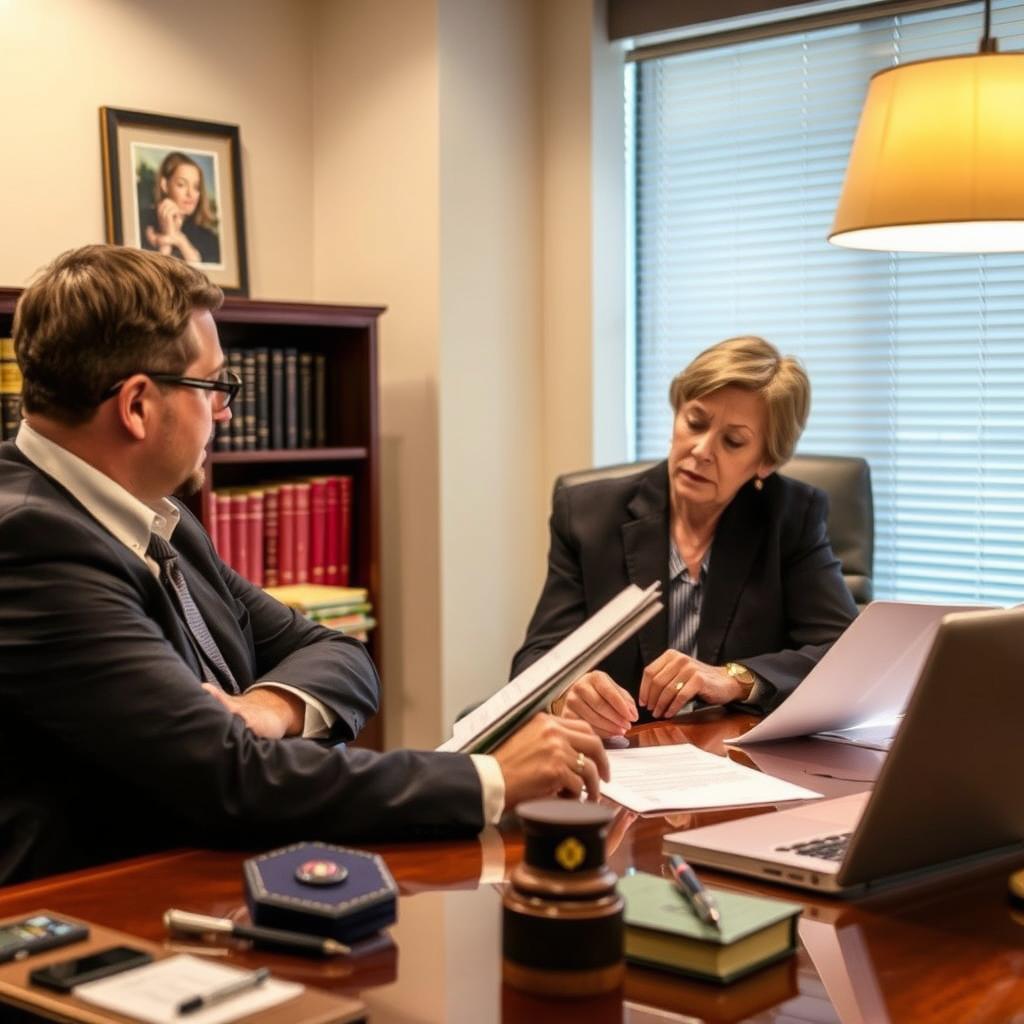
Marital Property Lawyer Roanoke County, VA
You have spent years building a life in Roanoke County — a home in Salem, a retirement account funded through a career in the Roanoke Valley, maybe a family business serving the Cave Spring or Vinton communities. Now a divorce has left you wondering: which of those assets are yours to keep, and which will the court divide? Under Virginia’s equitable distribution statute, the classification of everything you own as marital or separate property will shape the outcome of your case. Law Offices Of SRIS, P.C. represents clients throughout Roanoke County in contested and uncontested divorce proceedings, focusing on the identification, valuation, and division of marital property. Mr. Sris and the firm’s Of Counsel attorneys appear regularly before the Roanoke County Circuit Court — the court with exclusive jurisdiction over divorce and property division in the Twenty-third Judicial District — and work toward resolutions that protect your financial interests. Results may vary. To schedule a consultation, call (888) 437-7747. Law Offices Of SRIS, P.C. – Advocacy Without Borders.
What Marital Property Means in Roanoke County
Virginia is not a community property state. Under Va. Code § 20-107.3, the Roanoke County Circuit Court conducts an equitable distribution of marital assets — meaning it divides property fairly but not necessarily equally. The court first classifies each asset as marital, separate, or hybrid (part marital and part separate). Marital property generally includes everything acquired during the marriage by either spouse, regardless of whose name is on the title, unless it came from a gift or inheritance from a third party. Separate property is what you owned before the marriage, or what you received individually as a gift or inheritance, and it remains yours barring commingling or a written agreement to the contrary.
Roanoke County’s courts see a wide range of property disputes — from the modest family home in Hollins to complex estates involving professional practices, commercial real estate, investment portfolios, and deferred compensation plans. The Circuit Court at 305 East Main Street in Salem considers eleven statutory factors when deciding how to divide the marital estate, including each spouse’s contributions to the family’s well-being, the length of the marriage, the ages and health of the parties, and the tax consequences of a proposed division. Because the judge has broad discretion, outcome-driven advocacy that presents a clear, well-documented picture of the marital estate can be critical. The firm’s attorneys work with forensic accountants, business valuators, and pension attorneys when necessary to build a persuasive equitable-distribution argument.
How Mr. Sris and His Of Counsel Handle Marital Property Cases
Marital property disputes rarely resolve themselves. Whether you are negotiating a separation agreement or preparing for trial, early case assessment sets the stage for a favorable outcome. Mr. Sris and the firm’s Of Counsel attorneys begin by working with you to inventory all assets and debts — real estate, bank accounts, retirement funds, stock options, business interests, vehicles, and personal property of significant value. The next step is classification: determining which items are marital and subject to division, and which are separate. In complex cases, tracing separate-property contributions to a marital asset can make the difference between retaining a pre-marital investment and seeing it divided by the court.
When disputes over valuation or classification cannot be resolved through negotiation, the firm litigates contested divorce and equitable-distribution matters in the Roanoke County Circuit Court. Every case is fact-specific, and the timeline depends on the complexity of the assets and the court’s calendar. Throughout the process, Mr. Sris and his Of Counsel maintain a disciplined focus on your long-term financial security. Results may vary. For guidance on the division of your assets, call (888) 437-7747.
About Mr. Sris and His Of Counsel Team
Mr. Sris, Owner and Founder of Law Offices Of SRIS, P.C., has practiced law since 1997 and is admitted in Virginia, Maryland, the District of Columbia, New Jersey, and New York. He is a former prosecutor. Mr. Sris testified before the Virginia House Courts of Justice Committee in support of 2019 HB 635 (chief patron Del. David Bulova). The firm’s Of Counsel attorneys bring extensive combined legal experience between Mr. Sris and his Of Counsel. Results may vary. Collectively, Mr. Sris and the firm’s Of Counsel attorneys handle family-law matters across multiple Virginia jurisdictions, including Roanoke County, and draw on deep familiarity with local court practices to advocate for clients’ property interests.
Frequently Asked Questions
What is marital property in a Virginia divorce?
Marital property in Virginia is the property acquired by either spouse during the marriage, other than gifts or inheritances from a third party, and is subject to equitable distribution under Va. Code § 20-107.3. The classification does not depend on whose name appears on the title. The court will separately identify each spouse’s separate property — assets owned before the marriage or received individually as an inheritance or gift — and set that aside. Assets that are part marital and part separate (hybrid property) are valued, and the marital portion is subject to division. If you and your spouse cannot agree on a division, the Roanoke County Circuit Court will decide after considering statutory factors.
How is marital property divided in Roanoke County?
The Roanoke County Circuit Court divides marital property equitably, meaning fairly, not necessarily equally, after evaluating 11 statutory factors listed in Va. Code § 20-107.3. The judge weighs each spouse’s contributions to the family’s well-being, the duration of the marriage, the parties’ ages and health, the tax implications of a proposed division, and the circumstances that led to the dissolution, among other criteria. If you and your spouse have signed a separation agreement that resolves property distribution, the court generally incorporates that agreement into the final divorce decree. Mediation is also available and can help reach a negotiated settlement without a trial.
Do I need a lawyer to protect my separate property in a divorce?
While you are not required to hire a lawyer, protecting separate property in a Roanoke County divorce often demands careful documentation and legal argument to prove that the asset is not marital. Commingling of separate funds with marital accounts, or using marital labor to improve a separate asset, can create a hybrid classification that gives the court discretion to divide part of the property. Mr. Sris and his Of Counsel work to trace the origin of assets and present evidence that supports your separate-property claim. A misstep in classification can permanently alter your financial future.
How does the court value a business or retirement account?
The court relies on evidence such as experienced attorney valuations, tax returns, account statements, and balance sheets to determine the present value of a business or retirement plan for equitable distribution. A closely held business may require a forensic accountant or business appraiser to separate personal goodwill from enterprise goodwill — only the latter may be treated as marital property. For retirement accounts, including 401(k)s and pensions, the marital share is typically the portion accumulated during the marriage, and a qualified domestic relations order (QDRO) may be used to divide the asset without triggering tax penalties. The firm works with attorney when complex valuation issues arise.
Can we agree on property division without going to court?
Yes, many Roanoke County divorces resolve property division through a written separation agreement, which the Circuit Court can incorporate into the final divorce decree. A separation agreement allows you and your spouse to decide how to classify and divide assets on your own terms, avoid litigation costs, and maintain control over the outcome. If there are no minor children and the agreement resolves all issues, a no-fault divorce on six-month separation grounds may be available. Mr. Sris and his Of Counsel can negotiate and draft a property settlement that protects your interests and meets Virginia’s legal requirements.
What should I bring to a consultation about marital property?
Bring a list of all assets and debts, along with any documents that show when and how each asset was acquired — deeds, account statements, tax returns, and business records — so your lawyer can begin the classification analysis. Also bring any prenuptial or postnuptial agreements that may control property division. Having this information ready accelerates the case assessment and lets you start making informed decisions. Call (888) 437-7747 to schedule a consultation with Mr. Sris and his Of Counsel at Law Offices Of SRIS, P.C.
For additional information, visit:
- Family Law Lawyer Fairfax County, VA
- Family Law Lawyer Fairfax, VA
- Family Law Lawyer Falls Church, VA
- Family Law Lawyer Prince William County, VA
- Family Law Lawyer Manassas, VA
Primary authority resources:
Attorney advertising. Prior results do not guarantee a similar outcome.
Case results depend on a variety of factors unique to each case.
Results may vary.