
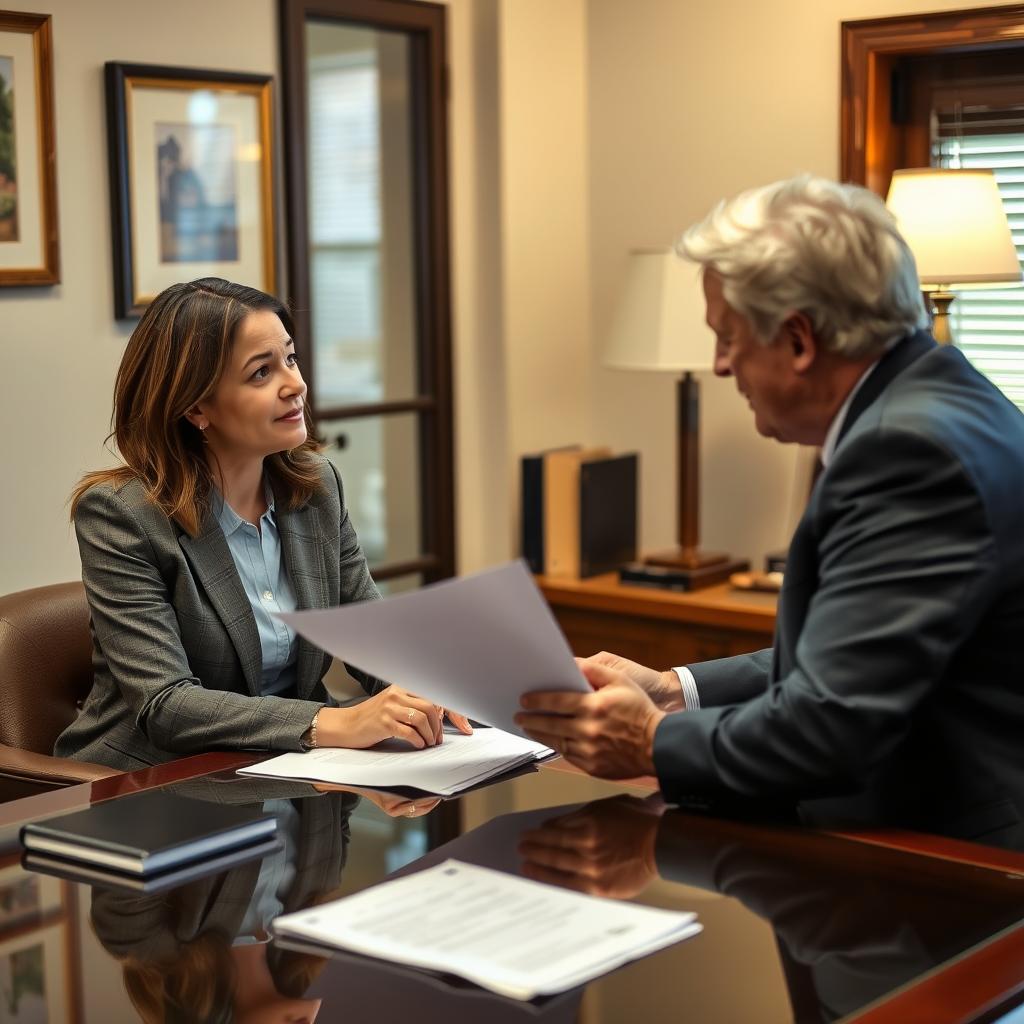
Property Settlement Lawyer Fluvanna County, VA
You are going through a divorce in Fluvanna County, and the two of you cannot agree on how to divide the marital home, retirement accounts, or the debts you accumulated together. The conversation is no longer productive. You need a property settlement that a Fluvanna County Circuit Court judge will accept—one that works under Virginia’s equitable distribution law. At Law Offices Of SRIS, P.C., Mr. Sris and the firm’s Of Counsel attorneys help clients in Palmyra, Fork Union, Lake Monticello, and throughout Fluvanna County resolve property division disputes. To discuss your situation, call (888) 437-7747. Law Offices Of SRIS, P.C. – Advocacy Without Borders.
Your Options for Resolving Property Division in Fluvanna County
When a couple cannot agree on how to divide marital assets, they have several paths forward. Each path gives them a different level of control over the outcome.
Negotiation through attorneys. Both sides, with their lawyers, exchange financial information and negotiate a written separation agreement that covers all property, support, and custody issues. If you reach a complete agreement, you can file an uncontested divorce and submit the agreement for the judge’s approval. This path avoids trial and keeps the decisions in your hands.
Mediation. A neutral mediator helps the parties work through disagreements. In Virginia, mediation is not mandatory, but it can be a cost‑effective way to resolve disputed items. Even if you do not settle everything in mediation, you can narrow the issues that a judge must decide.
Litigation in the Fluvanna County Circuit Court. When the parties cannot agree, the case goes before a judge. The court will classify, value, and divide the property under Virginia Code § 20‑107.3. Mr. Sris and the firm’s Of Counsel attorneys represent clients at every stage—from exchanging discovery through a final hearing—and work to protect your financial interests.
What to Expect in a Fluvanna County Equitable Distribution Case
Property division in Fluvanna County is governed by Virginia’s equitable distribution statute. The Fluvanna County Circuit Court, located at 72 Main Street, Suite B, Palmyra, VA 22963, has exclusive jurisdiction over divorce and the division of marital property. (Standalone custody and support matters are heard in the Fluvanna County Juvenile and Domestic Relations District Court.)
A property settlement case typically follows these steps:
Filing. One spouse files a Complaint for divorce. The divorce itself will be based on a ground in Virginia Code § 20‑91—commonly a six‑month or one‑year separation period, depending on whether the parties have a written separation agreement and minor children.
Discovery. Both sides gather financial records: tax returns, bank statements, retirement plan statements, business valuations, and appraisals. For complex estates, the court may rely on forensic accountants and business valuators.
Negotiation and settlement conferences. Many cases settle before trial. The parties, with their attorneys, draft a property settlement agreement that is filed with the court. Once signed by both spouses and approved by the judge, the agreement becomes an enforceable part of the final divorce decree.
Trial. If no agreement is reached, the judge hears evidence and applies the factors listed in Va. Code § 20‑107.3 to divide the marital property equitably—meaning fairly, though not necessarily 50/50. The court’s calendar determines when the trial is scheduled.
How a Virginia Court Decides Who Gets What
Virginia is an equitable distribution state, not a community property state. The court does not automatically split everything down the middle. Instead, it must consider 11 statutory factors when deciding how to distribute marital assets. The goal is a division that is fair under the circumstances of the marriage.
The factors include the contributions, both monetary and non‑monetary, each spouse made to the family’s well‑being; the duration of the marriage; the ages and physical and mental condition of each party; how and when particular assets were acquired; the debts and liabilities of each spouse; and the tax consequences of a proposed division. Separate property—assets owned before the marriage, gifts, and inheritances—generally stays with the original owner unless it has been commingled with marital funds.
Because the judge has broad discretion, presenting a clear, well‑organized financial picture is critical. An attorney who concentrates in Virginia family law can help you document the factors that support your position and anticipate the arguments the other side will raise.
About Mr. Sris and the Firm’s Of Counsel Attorneys
Mr. Sris, Owner and Founder of Law Offices Of SRIS, P.C., concentrates his practice on family law and property division matters. He founded the firm in 1997 and has been admitted to practice in Virginia, Maryland, the District of Columbia, New Jersey, and New York. He testified before the Virginia House Courts of Justice Committee in support of 2019 HB 635 (chief patron Del. David Bulova), a bill that revised the equitable distribution statute. Mr. Sris maintains a focused caseload, allowing him to be closely involved in each matter he accepts.
The firm’s Of Counsel attorneys bring additional experience from prior prosecutorial and law‑enforcement backgrounds, and they are well‑versed in the procedures of Virginia’s Circuit Courts. Together, Mr. Sris and the firm’s Of Counsel attorneys have handled numerous family law and property settlement matters throughout the Commonwealth. Results may vary. in your case.
Frequently Asked Questions
What is a property settlement agreement in Virginia?
A property settlement agreement is a written contract signed by both spouses that resolves all property, support, and custody issues and is filed with the court. In an uncontested divorce, the judge reviews the agreement and, if it is fair and voluntary, incorporates it into the final divorce decree. The agreement can cover the division of real estate, retirement accounts, bank accounts, vehicles, debts, and any other marital asset or liability.
Is Virginia a community property state?
No. Virginia is an equitable distribution state, meaning marital property is divided fairly but not necessarily 50/50. The court considers 11 factors under Virginia Code § 20‑107.3. Separate property—such as assets owned before the marriage or received as an inheritance or gift—normally stays with the original owner, while marital property is subject to division.
How does equitable distribution work in Fluvanna County?
The Fluvanna County Circuit Court classifies each asset as marital, separate, or hybrid, values it, and then divides the marital portion under the statutory factors. The court can order the sale of property, direct one spouse to pay a monetary sum to the other, or award specific items to each party. The process begins when a divorce complaint is filed and often involves discovery and settlement negotiations before any trial.
Can we decide how to divide property without a judge?
Yes. If both parties can agree, they can draft a separation agreement that resolves all property issues, and the judge will approve it as part of an uncontested divorce. This keeps control of the outcome with the spouses and avoids the expense and uncertainty of a trial. Even if you do not agree on everything, narrowing the disputed items through negotiation or mediation can simplify what the court must decide.
What if my spouse is hiding assets?
Hidden assets are a serious concern in equitable distribution cases. Virginia law requires both parties to provide full financial disclosure. An experienced attorney can use discovery tools—requests for production of documents, interrogatories, and depositions—to uncover hidden accounts, undervalued business interests, or transfers that appear designed to defeat a spouse’s claim. If the court finds that one spouse has concealed assets, it may penalize that party.
How is a business or retirement account divided?
A business or retirement plan acquired during the marriage is marital property to the extent of the marital share, and its value is subject to division. The court may order the business owner to pay a monetary award to the other spouse rather than physically dividing the company. For retirement plans, a Qualified Domestic Relations Order (QDRO) can allocate a portion to the other spouse without triggering early withdrawal penalties.
Do I need a lawyer for a property settlement in Fluvanna County?
You are not legally required to hire a lawyer, but having legal representation can help protect your rights and ensure the agreement is enforceable. Property division involves complex rules about what is marital versus separate property, how assets are valued, and the tax consequences of different divisions. An attorney who practices regularly in the Fluvanna County Circuit Court can guide you through the process and help you avoid mistakes that could cost you later.
How long does property division take in Fluvanna County?
The timeline depends on whether the case is contested and on the Fluvanna County Circuit Court’s calendar. If both spouses sign a comprehensive separation agreement, an uncontested divorce can move forward relatively quickly after the required separation period has elapsed. A contested case that requires discovery, motions, and a trial will take longer. Complex estates with business valuations or expert witnesses also add time.
What property is considered separate and not divisible?
Separate property includes assets you owned before the marriage, inheritances and gifts received by one spouse alone, and property purchased with separate funds. However, if separate property is mixed with marital assets—for example, depositing an inheritance into a joint account—the court may treat some or all of it as marital property. Proper documentation can help preserve the separate character of an asset.
How do I start the property division process?
Begin by gathering financial records and speaking with an attorney who concentrates in Virginia family law. A consultation can help you understand which assets and debts are likely to be classified as marital, what your rights are, and whether a separation agreement or litigation is the better path. To discuss your situation with Law Offices Of SRIS, P.C., call (888) 437-7747.
Explore related pages:
Family Law Lawyer Fairfax County |
Family Law Lawyer Prince William County |
Family Law Lawyer Loudoun County
Virginia primary sources:
Virginia Code § 20‑107.3 – Equitable Distribution |
Virginia Courts
Attorney advertising. Prior results do not guarantee a similar outcome. Results may vary.
Case results depend on a variety of factors unique to each case.