
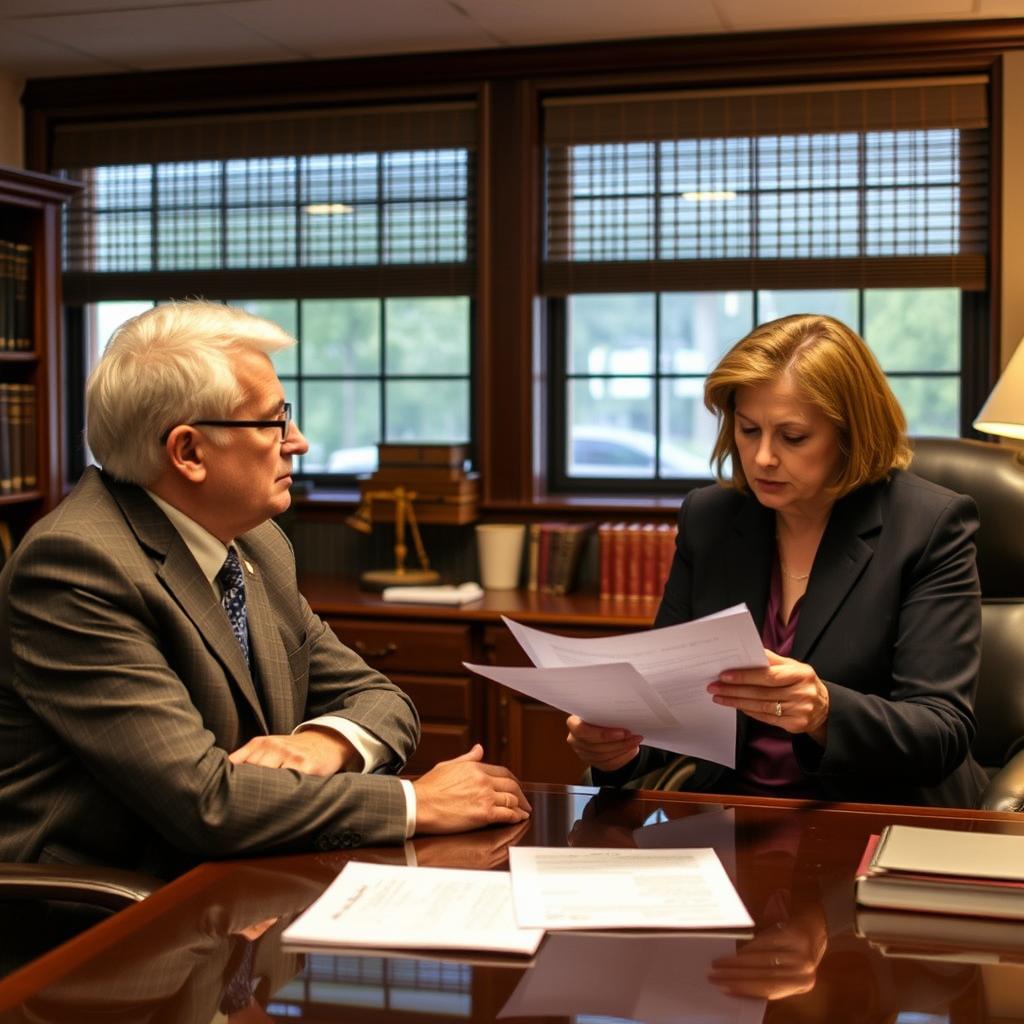
Alimony Modification Lawyer Rappahannock County, VA
An alimony or spousal support order issued by a Virginia court is not necessarily set in stone. When a substantial change in circumstances occurs, either party may seek to modify the existing support obligation—whether to increase, decrease, or terminate it. In Rappahannock County, these petitions are filed in Rappahannock County Circuit Court, located at 250 Gay Street, Suite 1, Washington, Virginia. The court applies the factors under Va. Code § 20‑107.1 and the modification standard in § 20‑109. Mr. Sris and the firm’s Of Counsel attorneys represent clients in alimony modification proceedings across the Twentieth Judicial District, including Washington, Sperryville, Flint Hill, and throughout Rappahannock County. The legal team evaluates the specific changes that have occurred—whether in income, employment, health, cohabitation, or other material circumstances—and builds a record to present to the Circuit Court. We work to achieve a fair adjustment while guiding clients through the procedural requirements of the Rappahannock County court. Reach Law Offices Of SRIS, P.C. at (888) 437‑7747 to schedule a consultation. Law Offices Of SRIS, P.C. – Advocacy Without Borders.
What Alimony Modification Means in Rappahannock County
Alimony, called spousal support in Virginia, is financial support paid by one former spouse to the other. Under Virginia law, a spousal support award may be modified if the party seeking the change proves a material change in circumstances that was not contemplated at the time of the original order and that justifies a different support amount. The petition is filed in the Circuit Court that issued the decree; in Rappahannock County, that is the Rappahannock County Circuit Court within the Twentieth Judicial District. The court considers the same factors used to set initial support—the earning capacity, financial resources, standard of living during the marriage, contributions to the marriage, and the needs of each party—along with the change itself. Common grounds for modification include a significant involuntary loss of income, a substantial increase in the recipient’s earnings, the recipient’s cohabitation in a relationship analogous to marriage, or a serious health condition that affects the ability to pay or receive support.
The procedural process in Rappahannock County mirrors the practice elsewhere in Virginia. The moving party files a petition (a motion to modify) with the Circuit Court clerk, along with a praecipe and the required filing fee. The opposing party is served and given an opportunity to respond. Discovery may follow, and the matter may proceed to a hearing before the judge. The Rappahannock County Circuit Court sits in Washington, Virginia, and serves the small, close‑knit communities of the county. Because the court’s docket includes cases from neighboring localities, scheduling and procedural pacing depend on the court’s calendar. Mr. Sris and his Of Counsel are familiar with the local practice and appear regularly in the Rappahannock County courthouse.
How Mr. Sris and His Of Counsel Handle Alimony Modification Cases
When a client comes to Law Offices Of SRIS, P.C. Seeking to modify an existing spousal support order, the legal team first assesses whether the change in circumstances is both material and unanticipated. This involves a careful review of the original support order, the financial circumstances at the time of that order, and the current situation. The analysis is grounded in Va. Code § 20‑109, which governs modification, and the factors enumerated in § 20‑107.1. The firm’s approach is collaborative: Mr. Sris and the Of Counsel attorneys work together to gather documentation, identify key witnesses, and, where possible, negotiate a consent order with the other party. If negotiation is unavailing, the matter is litigated in the Rappahannock County Circuit Court.
Our representation includes preparing financial affidavits, documenting changes in income and expenses, and, when necessary, engaging financial professionals to analyze complex assets or cash‑flow issues. At every stage, we keep the client informed about what to expect from the court process. The firm does not promise a particular result, but we draw on extensive combined legal experience between Mr. Sris and his Of Counsel to build a persuasive record for the judge. Every modification case is unique; the firm tailors its effort to the specific facts and the local practice of the Rappahannock County court.
About Mr. Sris and the Firm’s Of Counsel Attorneys
Mr. Sris, Owner and Founder of Law Offices Of SRIS, P.C., has practiced law since 1997 and is admitted in Virginia, Maryland, the District of Columbia, New Jersey, and New York. A former prosecutor, he brings a practical understanding of court dynamics to every family law matter. Mr. Sris testified before the Virginia House Courts of Justice Committee in support of 2019 HB 635 (chief patron Del. David Bulova). His own practice concentrates on complex family law issues, including spousal support and equitable distribution. The firm’s Of Counsel attorneys contribute additional experience in litigation, family relations, and financial analysis. Together, Mr. Sris and the firm’s Of Counsel attorneys represent clients in alimony modification proceedings in Rappahannock County and throughout Virginia.
Frequently Asked Questions
What must I prove to modify spousal support in Virginia?
To modify spousal support in Virginia, you must prove a material change in circumstances that was not contemplated when the original support order was entered and that warrants a different support amount. The change can be an increase or decrease in the payor’s ability to pay, a change in the recipient’s need for support, or a development such as the recipient’s cohabitation in a relationship analogous to marriage. The court uses the factors listed in Va. Code § 20‑107.1 to evaluate the change. Simply believing the amount is unfair is not enough; you need concrete evidence. A Rappahannock County family law attorney can review your situation and help you gather the documentation to present to the Circuit Court.
How does the court decide whether a change is “material” enough to modify alimony?
The court evaluates whether the alleged change significantly affects the financial circumstances of either party in a way the parties likely did not anticipate. For example, an involuntary job loss with a substantial income reduction is usually material; a voluntary departure from employment may not be, unless justified. A modest cost‑of‑living increase, standing alone, is generally not sufficient. The judge in Rappahannock County will compare the current circumstances to the facts that existed when the last support order was issued, applying the statutory factors. The firm can help you frame the change and build the record needed to satisfy the court.
Can an alimony order be ended if the recipient starts living with a new partner?
Yes, under Va. Code § 20‑109(A), spousal support terminates upon clear and convincing proof that the recipient has been habitually cohabiting with another person in a relationship analogous to marriage for one year or more. Cohabitation does not automatically end support; the payor must file a motion and prove the cohabitation. The court considers factors such as shared finances, shared residence, and the nature of the relationship. If the evidence meets the statutory standard, the support obligation ends as of the date the motion is filed. The firm assists clients in gathering the necessary proof and presenting it to the Rappahannock County Circuit Court.
How long does an alimony modification case take in Rappahannock County?
The timeline for an alimony modification case in Rappahannock County depends on the court’s docket, the complexity of the issues, and whether the parties reach a settlement. Some motions are resolved by agreement within a few months; contested hearings can take longer because they require discovery and scheduling with the Circuit Court. The Rappahannock County courthouse serves a rural district, and hearing dates are set according to the judge’s calendar. Mr. Sris and the firm’s Of Counsel attorneys work to move the matter forward efficiently while protecting your interests. For a specific estimate, contact Law Offices Of SRIS, P.C. at (888) 437‑7747.
Do I need a lawyer to modify spousal support in Rappahannock County?
You are not required to have a lawyer, but an experienced attorney can help you present a stronger case, particularly if the other party is represented. The legal standard—material change in circumstances—is fact‑intensive, and the procedural rules of the Circuit Court must be followed. Mr. Sris and the firm’s Of Counsel attorneys have extensive experience in Virginia family law and appear regularly in Rappahannock County courts. They can evaluate your situation, advise you on the viability of your modification petition, and represent you throughout the proceeding. To discuss your matter, reach Law Offices Of SRIS, P.C. at (888) 437‑7747.
What evidence should I gather before seeking an alimony modification?
Start by collecting pay stubs, tax returns, bank statements, and other financial documents that show the change in income or expenses. If the modification is based on the recipient’s improved finances or cohabitation, evidence such as social media posts, photographs, or lease agreements may be relevant. Medical records can support a claim based on health changes. The more concrete the documentation, the stronger your petition. The firm can guide you on what evidence is most persuasive and help you organize it for the Rappahannock County Circuit Court.
Family law matters in other Virginia localities:
Fairfax County Family Law |
Fairfax City Family Law |
Falls Church Family Law |
Prince William County Family Law |
Manassas Family Law
Virginia primary sources:
Va. Code § 20‑107.1 |
Va. Code § 20‑109 |
Rappahannock County Circuit Court
Attorney advertising. Prior results do not guarantee a similar outcome. Results may vary. each case is decided on its own facts.
Case results depend on a variety of factors unique to each case.