
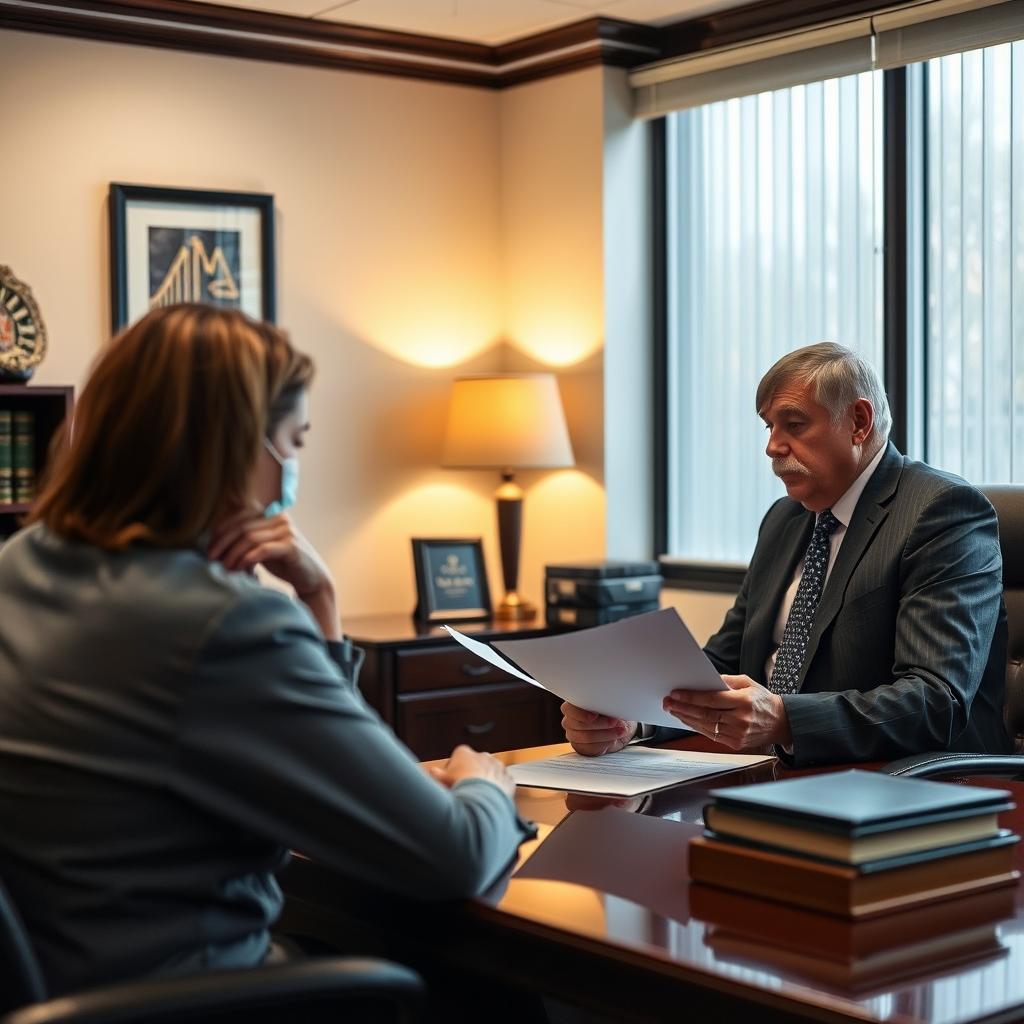
Armed Forces Divorce Lawyer Louisa County, VA
You are stationed at Fort Belvoir, deployed overseas, or perhaps your spouse serves in the Navy out of Norfolk—and now your marriage is at a crossroads in Louisa County, Virginia. Military life adds layers of complexity to divorce that civilian couples rarely encounter: the Servicemembers Civil Relief Act, jurisdiction questions when one party is stationed elsewhere, division of military pensions under federal and state rules, and custody arrangements when deployments disrupt routines. At Law Offices Of SRIS, P.C., Mr. Sris and his Of Counsel team understand these pressures. They have helped members of every branch and their families navigate family law matters across Virginia, including in the Louisa County Circuit Court and the Juvenile and Domestic Relations District Court. To discuss your situation and how we can approach the unique aspects of an armed forces divorce in Louisa County, reach our location at (888) 437‑7747. Law Offices Of SRIS, P.C. – Advocacy Without Borders.
What Armed Forces Divorce Means in Louisa County
Louisa County lies within the Sixteenth Judicial District of Virginia, with two courts relevant to armed forces divorce. The Louisa County Circuit Court, located at 100 West Main Street, Louisa, handles the divorce itself, equitable distribution of marital property, and spousal support. The Louisa County Juvenile and Domestic Relations District Court addresses child custody, visitation, child support, and protective orders. For military families, these courts apply the same Virginia statutes—including Va. Code § 20‑91 (grounds for divorce) and § 20‑107.3 (equitable distribution)—but must also account for federal laws such as the Servicemembers Civil Relief Act (SCRA) and the Uniformed Services Former Spouses’ Protection Act (USFSPA).
Because a service member or his or her spouse may be deployed, transferred, or residing in another state, issues of residency, personal jurisdiction, and the possibility of a stay of proceedings often arise. Virginia requires at least six months of domicile and residence for a divorce suit (Va. Code § 20‑97). If one spouse is on active duty and cannot participate due to military orders, the SCRA permits the court to delay proceedings to protect the service member’s rights, which can directly affect how quickly the case moves through the Louisa County courts. Our attorneys work with service members and their families to navigate these overlapping legal frameworks while keeping the focus on achieving a fair resolution in the local courts.
How Mr. Sris and His Of Counsel Handle Armed Forces Divorce Cases
Every military divorce begins with a careful evaluation of jurisdiction—determining whether Virginia has authority to dissolve the marriage and decide property and custody issues. Mr. Sris and his Of Counsel examine where the parties are domiciled, where the service member claims legal residence, and where the children have lived for the past six months. For a Louisa County divorce, at least one party must meet the Virginia residency requirement. We then prepare and file the Complaint in the Louisa County Circuit Court, while any immediate custody or support matters may be brought in the Juvenile and Domestic Relations District Court.
Property division in a military divorce requires meticulous attention to the division of military retirement benefits. Under the USFSPA, state courts like those in Virginia can treat disposable retired pay as marital property subject to equitable distribution. Mr. Sris and his Of Counsel have experience working with the Defense Finance and Accounting Service (DFAS) to prepare the necessary court orders for direct payment of a former spouse’s share of retired pay, provided the requirements of the “10‑year rule” are met. When the couple owns a home near Lake Anna or Zion Crossroads, or when a service member holds a Thrift Savings Plan account, we coordinate with financial professionals to value and divide assets. Throughout the process, we focus on transparent communication and a practical approach that respects the demands of military life—whether that means accommodating a deployment schedule or coordinating with a base legal assistance attorney while still safeguarding our client’s position in the Louisa County courts.
About Mr. Sris and His Of Counsel Team
Mr. Sris, Owner and Founder of Law Offices Of SRIS, P.C., founded the firm in 1997 and has been handling family law matters, including complex divorces involving military families, for nearly three decades. He is admitted to practice in Virginia, Maryland, the District of Columbia, New Jersey, and New York. Mr. Sris testified before the Virginia House Courts of Justice Committee in support of 2019 HB 635 (chief patron Del. David Bulova), which addressed the division of retirement benefits in equitable distribution proceedings. The firm’s Of Counsel attorneys each bring over a decade of litigation experience, and collectively they draw on over 120 years of combined legal experience between Mr. Sris and his Of Counsel, with 4,739+ documented firm-wide results. Results may vary.
Frequently Asked Questions
What is an armed forces divorce in Virginia?
An armed forces divorce is a dissolution of marriage where at least one spouse is a current or former member of the U.S. Military, subject to Virginia state law and special federal protections such as the SCRA. In Louisa County, the case proceeds like other divorces—grounds must be established under Va. Code § 20‑91, the separation period must be met, and equitable distribution applies under § 20‑107.3—but additional considerations include jurisdiction over the service member, potential stays of proceedings, and the division of military retired pay. A knowledgeable attorney can help ensure the service member’s rights are protected while keeping the case moving through the local courts.
How does deployment affect custody and visitation in a Louisa County military divorce?
Deployment does not permanently alter a parent’s custody rights, but Virginia courts can issue temporary orders that provide a practical plan for the child during the deployment period. Under Va. Code § 20‑124.3, the court must consider the best interests of the child, and a parent’s absence due to military service is not, by itself, a factor against awarding that parent future custody. The Louisa County Juvenile and Domestic Relations District Court can set a temporary visitation schedule and, if necessary, appoint a guardian ad litem to represent the child’s interests. A well‑drafted family care plan can also help demonstrate the deploying parent’s continued commitment.
How is a military pension divided in a Virginia divorce?
Virginia treats the marital share of a service member’s disposable retired pay as marital property subject to equitable distribution, following the guidelines in Va. Code § 20‑107.3 and the federal 10‑year rule for direct DFAS payments. The court determines what portion of the pension was earned during the marriage and equitably divides that amount. If the parties’ marriage overlapped the service member’s creditable military service by at least ten years, the former spouse may receive direct payments from DFAS. Mr. Sris and his Of Counsel can prepare the necessary order to enforce this division in the Louisa County Circuit Court.
Can I get a divorce in Louisa County if my spouse is stationed elsewhere?
Yes, if you meet Virginia’s residency requirement—at least one party must be an actual bona fide resident and domiciliary of Virginia for at least six months. The Louisa County Circuit Court may exercise jurisdiction if either spouse qualifies. However, if the service member is stationed outside Virginia and has not consented to jurisdiction, the court’s authority over that spouse’s property rights may be limited. We analyze the situation thoroughly before filing to avoid jurisdictional obstacles and ensure the proceeding moves forward properly.
What should I bring to a consultation about a military divorce?
Bring any documents that show your marriage date, your spouse’s military status, your Virginia residency, and any existing separation agreement or court orders. Useful items include the marriage certificate, the service member’s Leave and Earnings Statement (LES), tax returns, deployment orders, and information about real estate or retirement accounts. If children are involved, have their school and medical records ready. This information helps Mr. Sris and his Of Counsel assess your situation quickly during your consultation at our Richmond Location, serving Louisa County clients by appointment. Call (888) 437‑7747 to schedule.
How do I find an armed forces divorce lawyer near Louisa County?
Look for a Virginia family law attorney with specific experience handling cases that involve military pensions, the SCRA, and the nuances of the USFSPA—and who regularly appears in the Louisa County Circuit Court and J&DR Court. Mr. Sris and his Of Counsel have spent decades practicing in Virginia and handling military divorces across the Commonwealth. Our Richmond Location is conveniently connected to Louisa County by I‑64 and Route 33, and we serve Louisa, Mineral, and Zion Crossroads. Reach us at (888) 437‑7747 to arrange an appointment and discuss the military‑specific aspects of your divorce.
Family law services in other Northern Virginia localities:
Fairfax County Family Law ·
Fairfax City Family Law ·
Falls Church Family Law ·
Prince William County Family Law ·
Manassas Family Law
Attorney advertising. Prior results do not guarantee a similar outcome. Case results depend on a variety of factors unique to each case. Results may vary. The firm’s Richmond Location welcomes meetings by appointment only; call (888) 437‑7747 to schedule. Law Offices Of SRIS, P.C., 7400 Beaufont Springs Drive, Suite 300, Room 395, Richmond, VA 23225.