
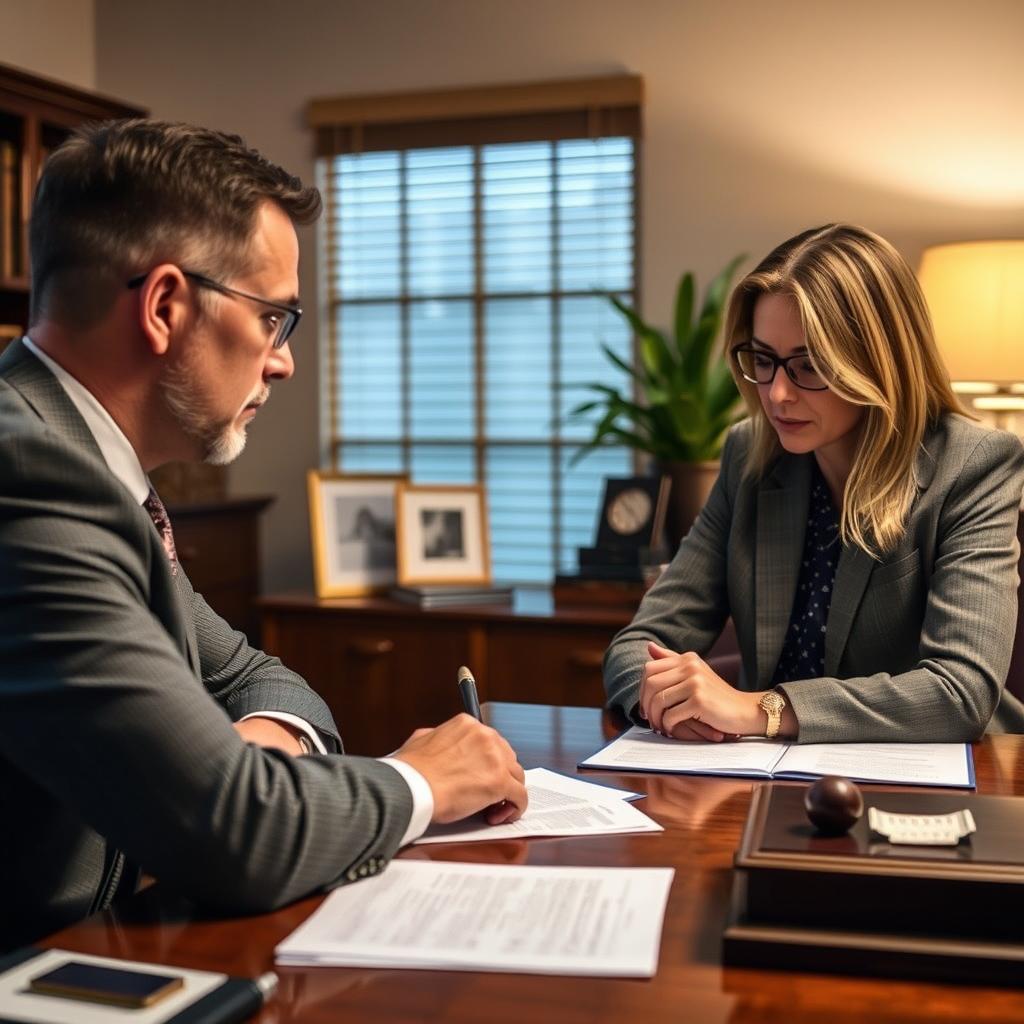
Marital Settlement Agreement Lawyer Rappahannock County, VA
You and your spouse have made the difficult decision to separate, and you want to settle the terms of your separation without a contentious court battle. A marital settlement agreement—often called a separation agreement—can resolve property division, spousal support, and other key issues outside of litigation. But to be enforceable in a Virginia court, the agreement must be carefully drafted to comply with the requirements of the Virginia Code and the specific practices of the Rappahannock County Circuit Court. At Law Offices Of SRIS, P.C., Mr. Sris and his Of Counsel team help clients throughout Rappahannock County negotiate and draft thorough, clear settlement agreements that protect their rights and minimize future conflict. To discuss your situation and explore whether a marital settlement agreement is right for you, call (888) 437-7747. Law Offices Of SRIS, P.C. — Advocacy Without Borders.
Our Approach to Marital Settlement Agreements in Rappahannock County
Every family’s circumstances are different, and a one‑size‑fits‑all form rarely serves a couple well. When you work with Mr. Sris and his Of Counsel, we begin by understanding your financial picture, your goals for property division, and any concerns about spousal support. We then prepare an agreement that addresses all marital assets and debts, retirement accounts, and, if applicable, any business interests. Throughout the process, we explain how Rappahannock County courts apply Virginia’s equitable‑distribution factors under Va. Code § 20‑107.3, so you know what to expect if a judge ever has to review the agreement. Our aim is to produce a document that is so clear and complete that it holds up over time and avoids unnecessary future litigation.
Negotiating the terms of a settlement can be emotionally charged. We bring a calm, methodical approach—identifying the key decision points, discussing trade‑offs, and keeping the focus on what is fair and practical. When both parties are represented by counsel, we communicate directly with the other attorney to work out the details. If your spouse is not represented, we can still help you draft an agreement that addresses the essential terms, though we always recommend that the other party seek independent legal review before signing.
What to Expect from the Agreement Process
For most couples in Rappahannock County, the path to a signed marital settlement agreement involves several steps. First, both spouses provide a complete financial disclosure—this is not merely a formality; a Virginia court may later set aside an agreement if it finds that one party concealed assets. Next, we identify which property is marital and which is separate under Virginia law, and we discuss how the parties wish to divide the marital estate. If spousal support is appropriate, we negotiate the amount and duration, keeping in mind the statutory factors in Va. Code § 20‑107.1 (citation verified and registered). Once the terms are settled, we draft the written agreement and review it with you line by line before you sign. The final document is then available to be incorporated into a divorce decree when the time comes.
The timeline for reaching an agreement depends on the complexity of your assets and the level of cooperation between the parties. Some couples resolve all issues within a few meetings; others require more extended negotiation. Throughout the process, we keep you informed and respond promptly to your questions.
Risks of an Incomplete or Unenforceable Agreement
Trying to draft a marital settlement agreement without legal guidance can lead to serious problems. Ambiguous language about who keeps the retirement account, or a vague description of the marital home’s division, can spark new disputes years down the road. If the agreement fails to address all marital property or does not follow the formalities required by Virginia law, a court may refuse to enforce it. For example, an agreement that was signed under duress or that is so one‑sided that it “shocks the conscience” of the court can be set aside. Working with Mr. Sris and his Of Counsel helps you avoid these pitfalls and gives you confidence that the terms you agreed to will be respected.
Additionally, a well‑drafted agreement can serve as the basis for a no‑fault divorce after the required separation period. When minor children are involved, the agreement can also address custody and child support, although those provisions are always subject to the court’s review of the child’s best interests.
Attorney Credentials
Mr. Sris, Owner and Founder of Law Offices Of SRIS, P.C., has practiced family law in Virginia since 1997. He is a former prosecutor who brings years of courtroom experience to the negotiation table, understanding how judges evaluate marital settlement agreements and the factors that can cause a judge to reject one. Mr. Sris testified before the Virginia House Courts of Justice Committee in support of 2019 HB 635 (chief patron Del. David Bulova), the legislation that updated Virginia’s equitable‑distribution statute. His Of Counsel team members—all experienced Virginia practitioners—support the firm’s family law work, collectively offering over 120 years of combined legal experience and 4,739+ documented firm-wide results. Results may vary.
For a detailed statutory breakdown of Virginia’s divorce and property‑division laws, visit our comprehensive guide at srislawyer.com.
Frequently Asked Questions
What is a marital settlement agreement in Virginia?
A marital settlement agreement is a written contract that resolves all issues arising from a separation, including property division, spousal support, and, if the parties choose, custody and child support. Under Virginia law, such an agreement can be incorporated into a final divorce decree, making its terms enforceable by the court. It is also a key document for obtaining a no‑fault divorce based on a six‑month separation when the parties have no minor children.
Do I need a lawyer to draft a marital settlement agreement?
You are not legally required to hire a lawyer, but having experienced counsel helps ensure the agreement is comprehensive, legally sound, and tailored to your specific situation. A poorly drafted agreement can leave out significant assets, create tax problems, or fail to meet Virginia’s enforceability requirements. An attorney also helps you understand the long‑term financial consequences of the terms you are agreeing to.
How is property divided in a Virginia marital settlement agreement?
Virginia follows the principle of equitable distribution, meaning that marital property is divided fairly, but not necessarily equally. The agreement must identify what is marital and what is separate property, then state how the marital assets and debts will be allocated. Courts will generally uphold a fair agreement that was signed voluntarily and with full disclosure. The statutory factors in Va. Code § 20‑107.3 guide what is considered equitable.
Can a marital settlement agreement be changed after it is signed?
Once a marital settlement agreement is incorporated into a final divorce decree, it is generally binding, though certain provisions—particularly those concerning child custody and child support—can be modified if there is a material change in circumstances. Provisions regarding property division and spousal support are more difficult to reopen unless the agreement itself includes a review clause or a court finds a valid ground to set it aside. It is critical to get the terms right the first time.
What if my spouse refuses to sign the agreement?
If your spouse will not sign a marital settlement agreement, the issues must be resolved through contested divorce proceedings in the Rappahannock County Circuit Court. The court will then determine property division, spousal support, and any other disputed matters based on the evidence presented. Having a skilled negotiator on your side often helps reach a voluntary resolution even when the other party is initially reluctant.
Does Rappahannock County have any special requirements for marital settlement agreements?
Rappahannock County follows the same Virginia Code requirements as the rest of the Commonwealth, but the local judges expect agreements to be thorough, clearly written, and accompanied by full financial disclosure. The Rappahannock County Circuit Court, located at 250 Gay Street, Suite 1, Washington, VA 22747, handles divorce and property‑division matters. Experience with the local court’s expectations helps avoid unnecessary delays or questions during the divorce hearing.
Related family law resources:
Family Law Lawyer Fairfax County, VA ·
Family Law Lawyer Prince William County, VA ·
Family Law Lawyer Fairfax City, VA
Virginia legal resources:
Virginia Code Title 20 (Domestic Relations) ·
Virginia Courts
To schedule a consultation about a marital settlement agreement in Rappahannock County, call (888) 437-7747.
Law Offices Of SRIS, P.C.
Fairfax Location — 4008 Williamsburg Court, Fairfax, VA 22032
By appointment only. Call (888) 437-7747.
Attorney advertising. Prior results do not guarantee a similar outcome. Case results depend on a variety of factors unique to each case. Results may vary.